When the Telstra network went down on 8 July 2026, millions of Australians lost mobile service for hours. Our clients flying live drone missions on HubX that morning didn't notice.
The HubX platform kept drones in the air right through the outage. As soon as the Telstra network failed, traffic redistributed across the healthy links and active client missions across Australia carried on with zero interruption.
Telstra traced the outage to a node timekeeping failure in its Sydney and Melbourne data centres. It began as early as 4:30am and left millions of customers without mobile service for several hours. Customers of Telstra-powered MVNOs Boost Mobile, Belong, Everyday Mobile, Tangerine and ALDI Mobile were caught in it too.
The knock-on effects were serious. The outage disrupted Triple Zero emergency call services, prompting warnings from Western Australia Police and the federal communications minister. It also halted train services across Victoria and regional New South Wales as transport infrastructure lost connectivity.
So how did our clients stay in the air while so much else went dark?
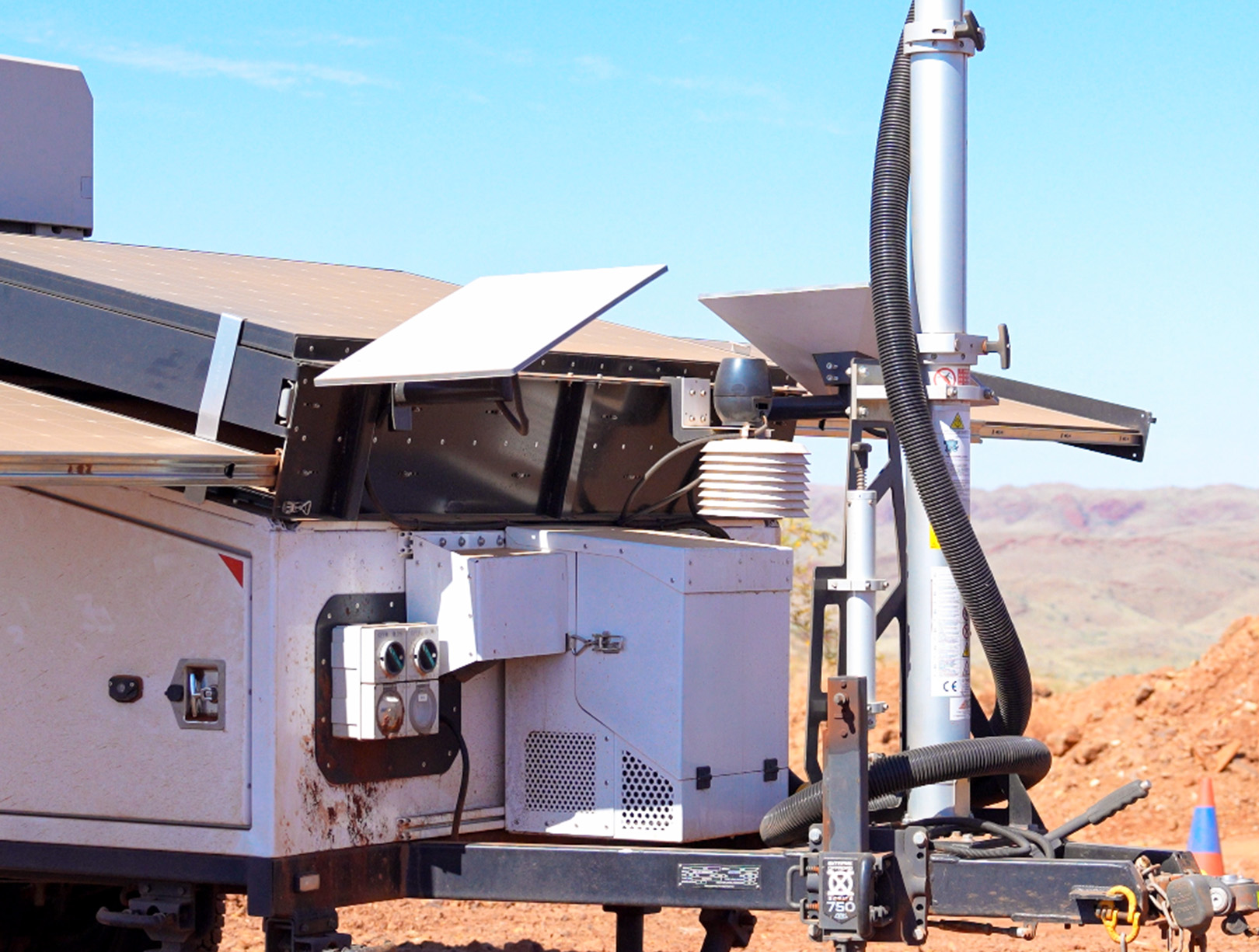
HubX bonds multiple cellular SIM cards across different carriers with a Starlink satellite backup into a single connection, and keeps every link active at once. The platform continuously monitors the health of each link, tracking latency, packet loss and reachability. When Telstra dropped, it redistributed traffic across the remaining healthy carriers and Starlink. No cutover event, no downtime.
Our CEO Paris Cockinos said the outage was another real-world example of HubX's inbuilt redundancy in action.
"When a carrier goes down from Telstra or Optus, our clients find out from the news. That's the whole point of the way we've built HubX. Multi-carrier redundancy isn't a feature we sell, it's a baseline we won't compromise on."
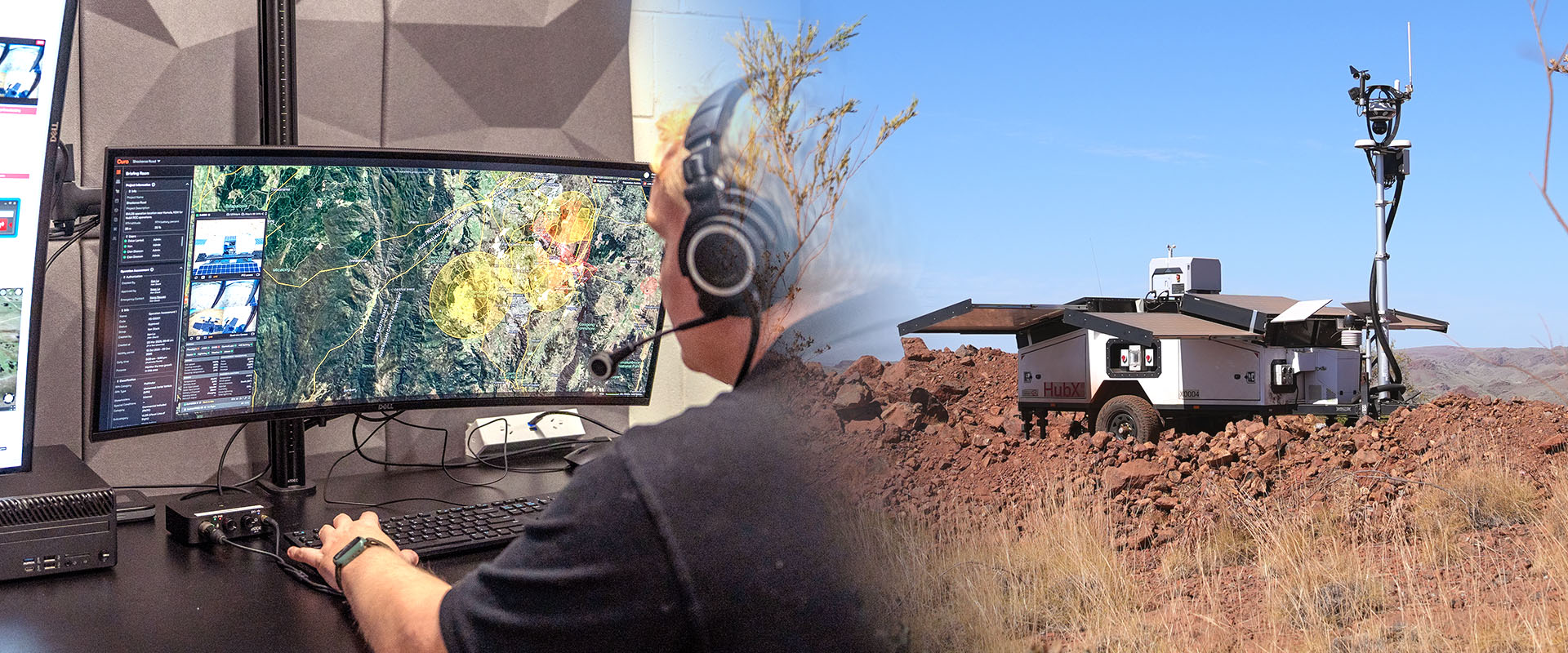
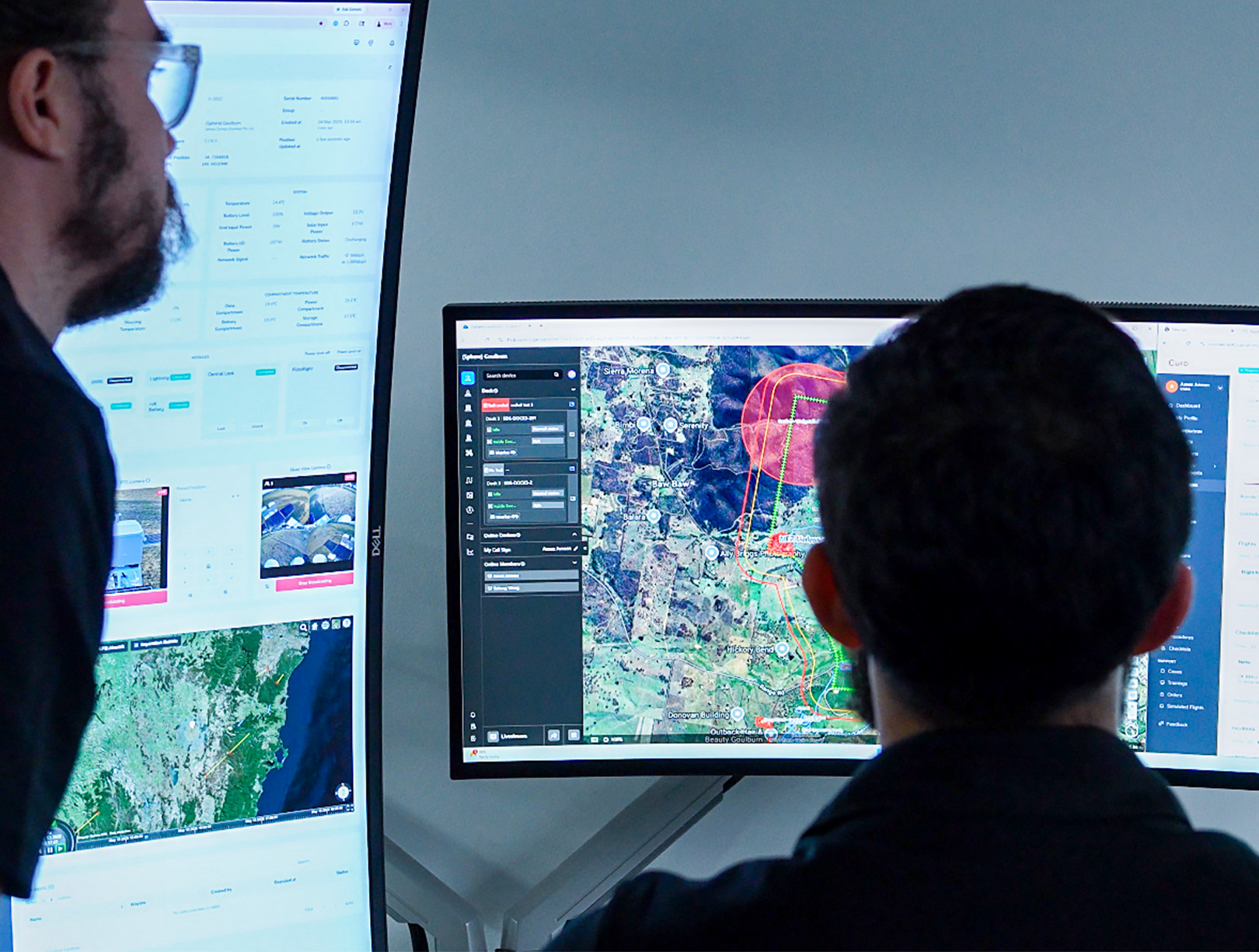
"BVLOS operations require a robust command and control network link, and that's exactly what HubX delivered this morning. Our Remote Operations Centre didn't skip a beat."
This isn't the first time. During the Optus outage of November 2023, which disconnected more than 10 million customers and knocked out Triple Zero calls on the Optus network, HubX trials at a remote mine in the Hunter Valley ran without interruption. Traffic redistributed across Telstra and Starlink with zero impact to operations. On 8 July 2026, with Telstra down, the platform did the same thing.

Shaun Van Goor, RPA Specialist and Project Surveyor at BHP, saw the resilience first-hand. "Despite the nation wide telecom outage, Sphere remained operational and continued providing critical drone support without compromising safety. These complex operations require preparation for the unexpected. Through layered redundancies and resilient system design, Sphere were tested and proven today."
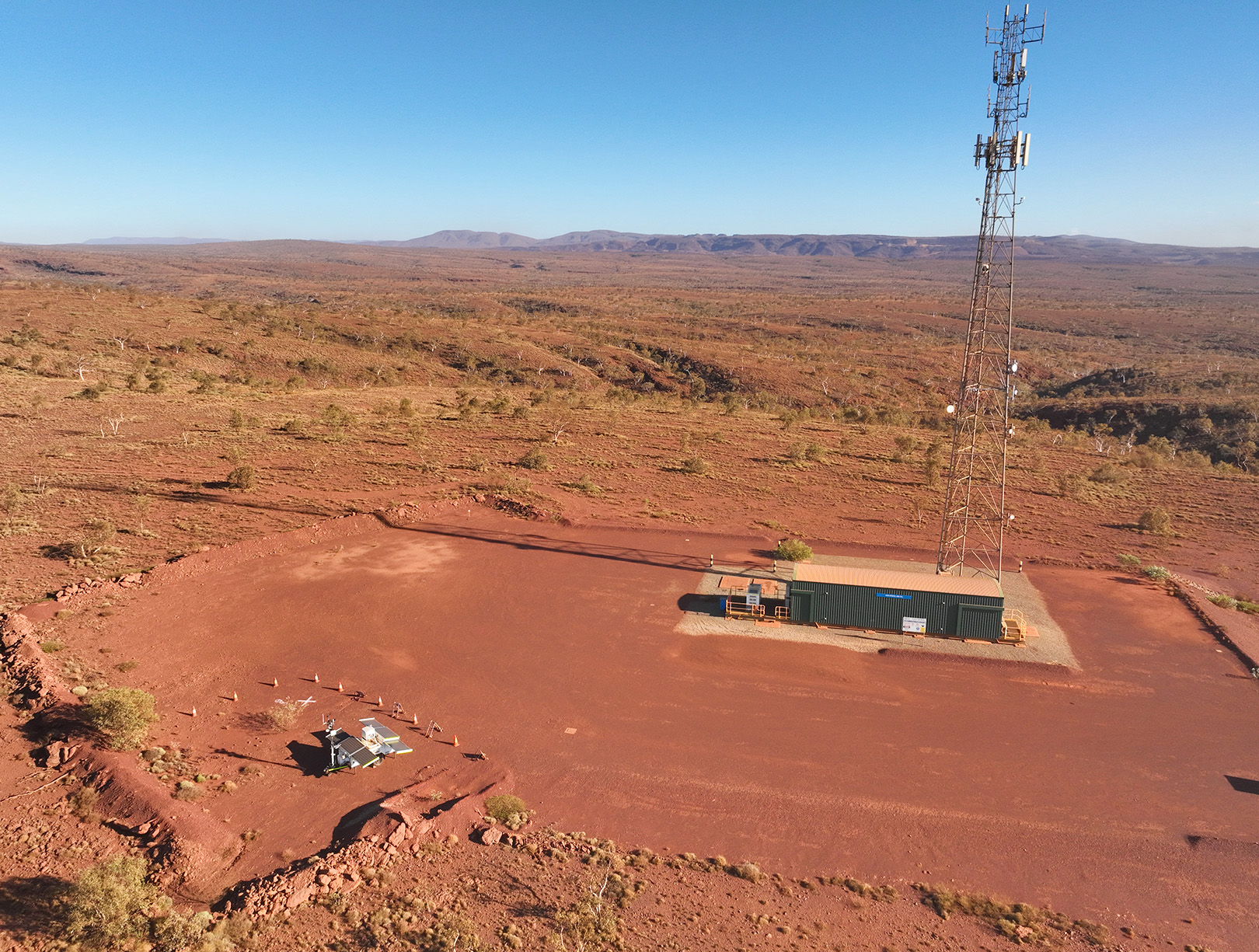
We've now logged more than 5,000 hours of flight time and over 5,000 missions for Australian customers across mining, energy and critical infrastructure.
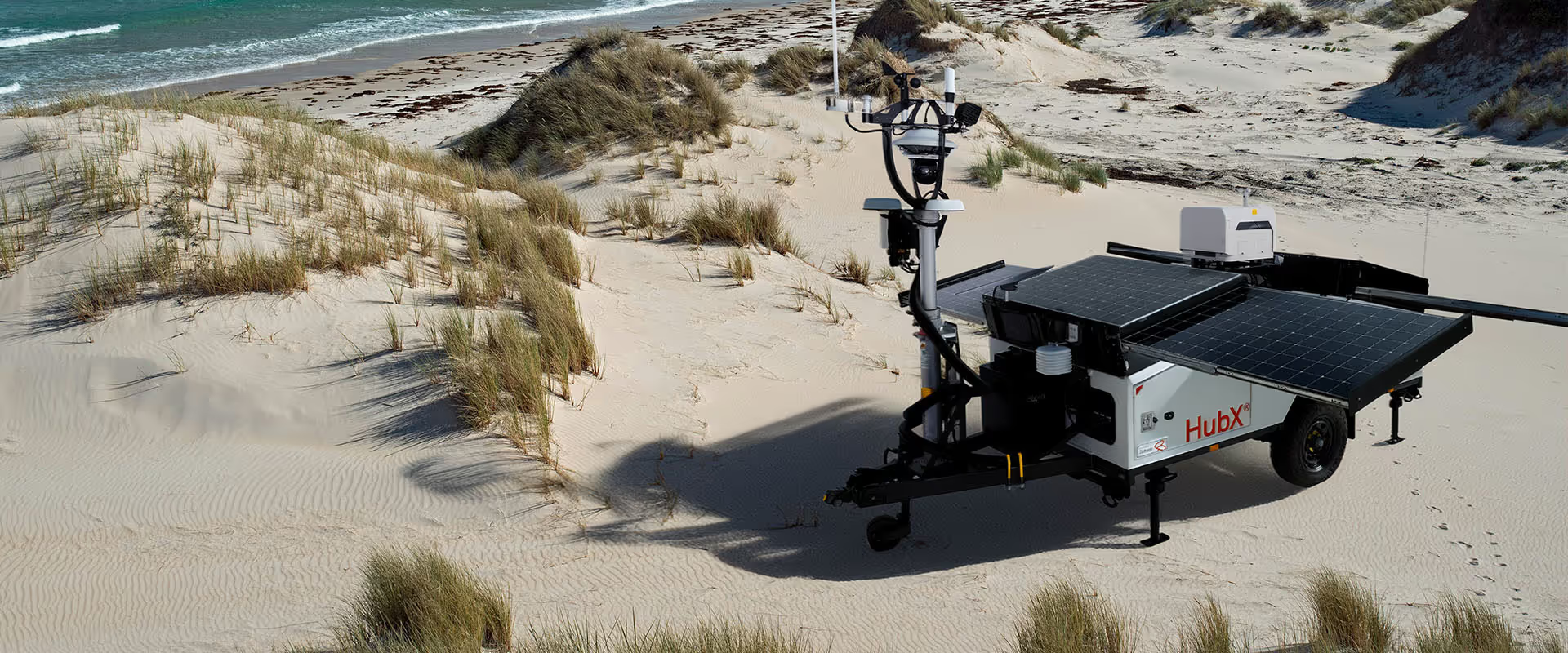
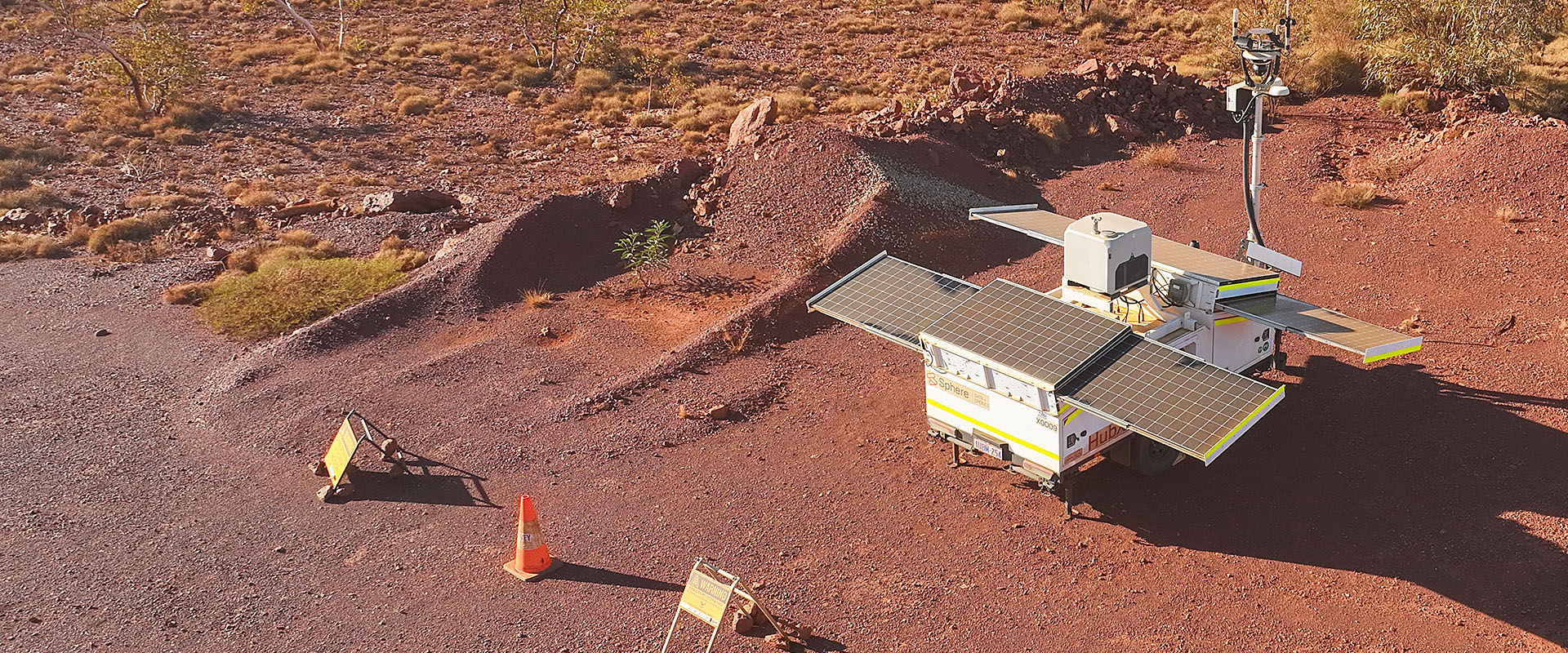
HubX is a turnkey solution that lets businesses operate drones from anywhere, collecting data anytime and off-grid. An Australian-built all-terrain trailer powers solar panels and battery storage to support self-sustaining BVLOS drone operations. WatchTower adds airspace monitoring, site visibility and environmental sensing alongside the DJI Dock 3 Drone-in-a-Box system.
You can run HubX yourself or have our Sydney-based Remote Operations Centre manage it for you, staffed by certified remote pilots holding a ReOC and Broad Area BVLOS approval.