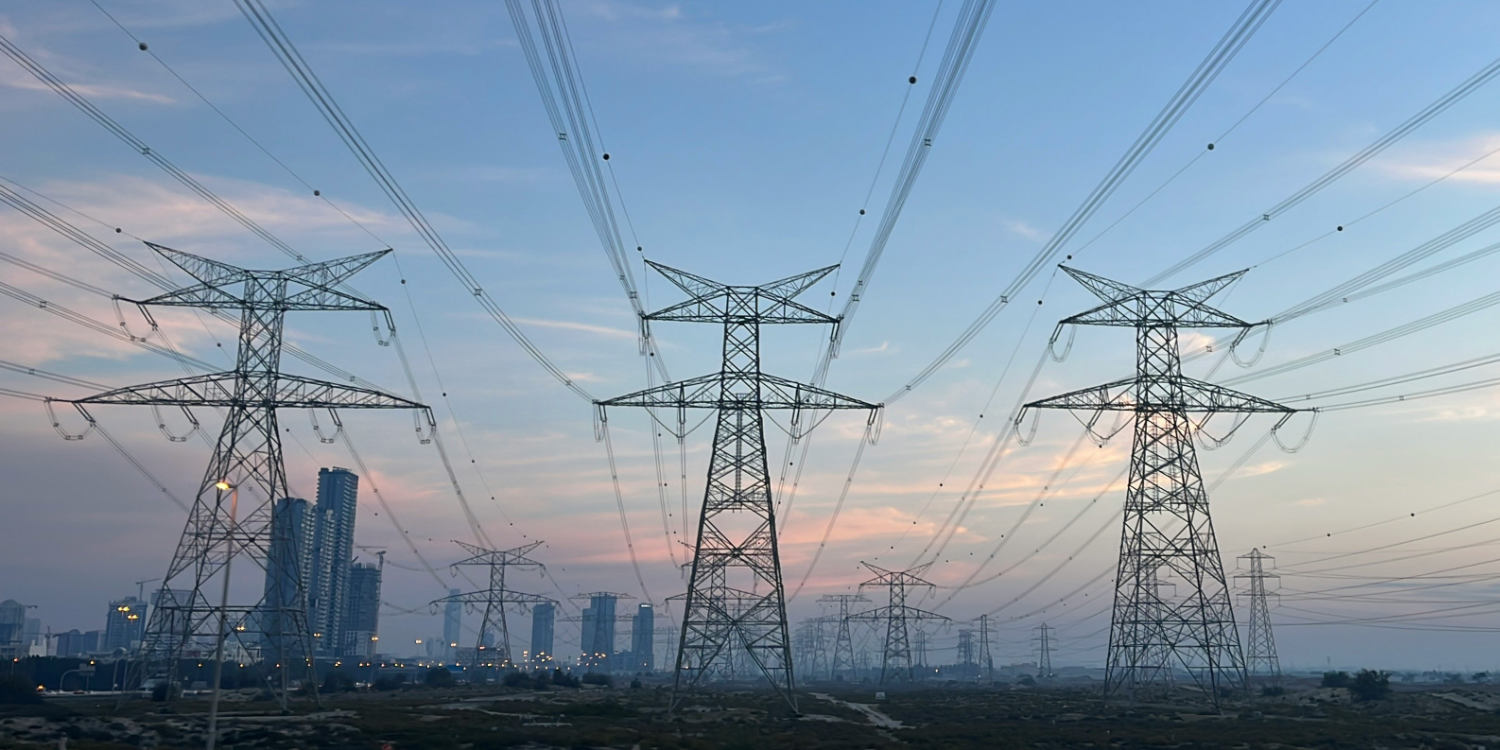
Networks run on asset condition data. Tower integrity, conductor wear, vegetation encroachment and post-event damage all depend on timely, accurate inspection.
Powerline and transmission inspection with an automated drone lets operators capture that condition far more often, without a helicopter and crew for every campaign.
Traditional drone and helicopter programs struggle to keep pace. They are expensive, weather-limited and crewed, so inspection cadence lags and vegetation outpaces survey.
Powerline and transmission inspection is the use of automated drone systems, remote operations technology and automated data workflows to perform routine aerial inspection across transmission and distribution assets.
Rather than operating drones manually, missions are pre-planned and automatically executed within an operational radius.
For example:
Captured data is automatically transferred into the GIS and asset-management systems the network operator already uses, as structured asset-condition data.
Tower and Conductor Inspection
Automated drones identify defects on towers, conductors and insulators without climbing or helicopter flights.
Vegetation Management
Regular capture maps encroachment along the corridor, helping prioritise clearing before it threatens the line.
Substation Inspection
Visual and thermal inspection detects hot-spots and condition issues across substation equipment.
Post-Storm Damage Assessment
After major weather, broad-area capture locates damage quickly to speed restoration.
New Project Monitoring
Construction of new transmission assets is monitored for progress and compliance.
These workflows can be scheduled on a fixed cadence or run on-demand after events.
Transmission corridors extend far beyond what a pilot can inspect within visual line of sight (VLOS).
Beyond visual line of sight (BVLOS) operations allow drones to inspect long linear corridors while maintaining compliance and safety, transforming the economics of what once required a helicopter and crew.
BVLOS capability enables:
For network operators, BVLOS is a key enabler of automated transmission inspection.
Effective transmission inspection requires more than a drone. It combines automated flight hardware, remote operations, governance controls and automated data delivery into a repeatable workflow.
At Sphere, powerline and transmission inspection programs combine:
Together, these technologies help network operators scale inspection beyond helicopter and crewed campaigns.
Network operators adopting automated inspection can achieve benefits across cost, reliability and safety.
Every network is different. The right mix of HubT and HubX depends on your asset density, your corridor length, and how condition data feeds your reliability program.
A Sphere team member can assess your network, identify the workflows worth automating first, and model autonomous inspection against your current helicopter and crew costs.
Book a network coverage assessment to see how automated inspection fits your operation.



.jpeg)