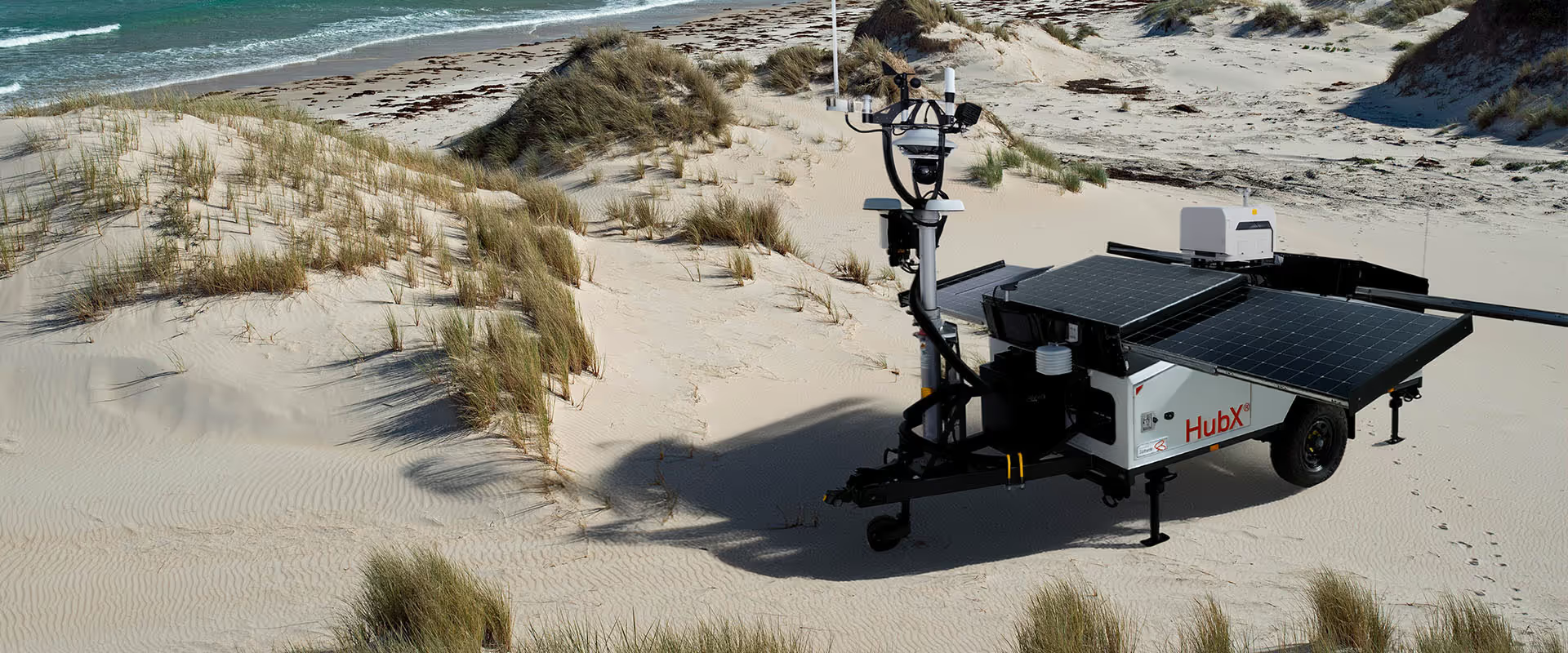
Over the past week, NSW has experienced a confronting run of shark incidents along its coastline. Four attacks in three days, multiple serious injuries, and repeated beach closures have put shark risk back at the centre of public conversation.
These incidents are not isolated, nor are they entirely unexpected.
Warmer waters, heavier rainfall events, and longer periods of shark activity are changing the risk profile of NSW beaches. At the same time, beach use continues to increase, more swimmers, more surfers, more families, across more locations, more often.
The question is no longer whether shark risk exists.
It’s whether our safety systems are keeping pace.
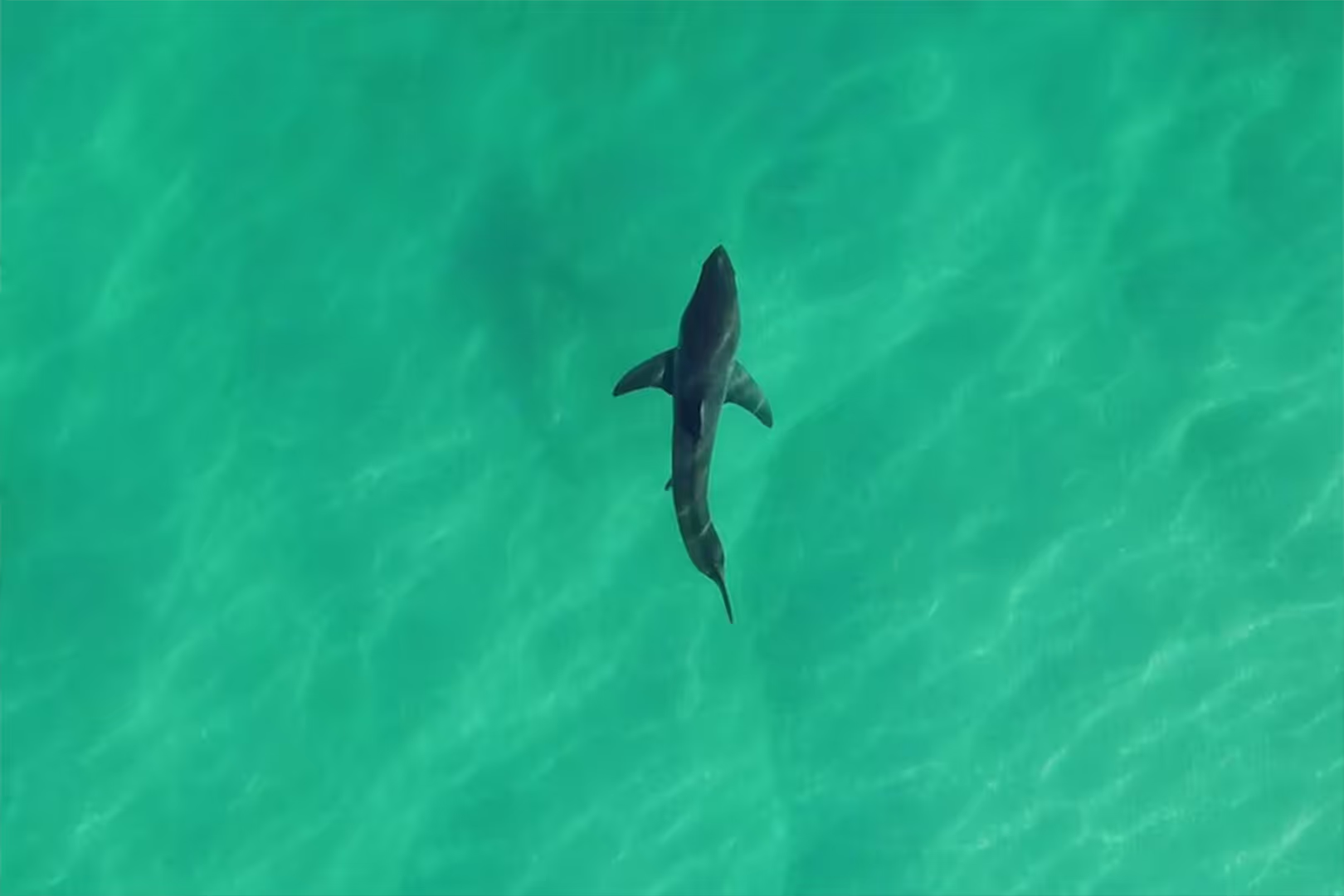
Current drone operations, largely delivered through Surf Life Saving NSW and partner programs, provide valuable protection, but they are inherently limited. Coverage is typically seasonal, weather-dependent, and constrained by daylight hours, volunteer availability, and manual deployment models.
In some regions, a small number of drones are responsible for monitoring dozens of beaches. During peak summer periods or following heavy rainfall, when risk is known to increase, maintaining consistent oversight becomes extremely challenging.
Local MPs and government representatives have acknowledged the need for technology to play a larger role. Pittwater MP Jacqui Scruby has stated that “the risk can never be eliminated, but it can be better managed with modern technology.”
NSW operates one of the most advanced shark mitigation programs in the world. This summer, that program includes:
These measures play an important role. But even with this investment, the scale of NSW’s coastline means coverage remains uneven, particularly outside peak periods or away from highly patrolled beaches.
This is where the conversation needs to shift from whether drones work, to how they are deployed.
In October of last year, we submitted a proposal to the NSW Government outlining a scalable, end-to-end solution using our autonomous drone-in-a-box systems, HubX and HubT. The proposal focuses on delivering consistent daylight aerial shark detection and monitoring without increasing operational burden on volunteer surf lifesavers.
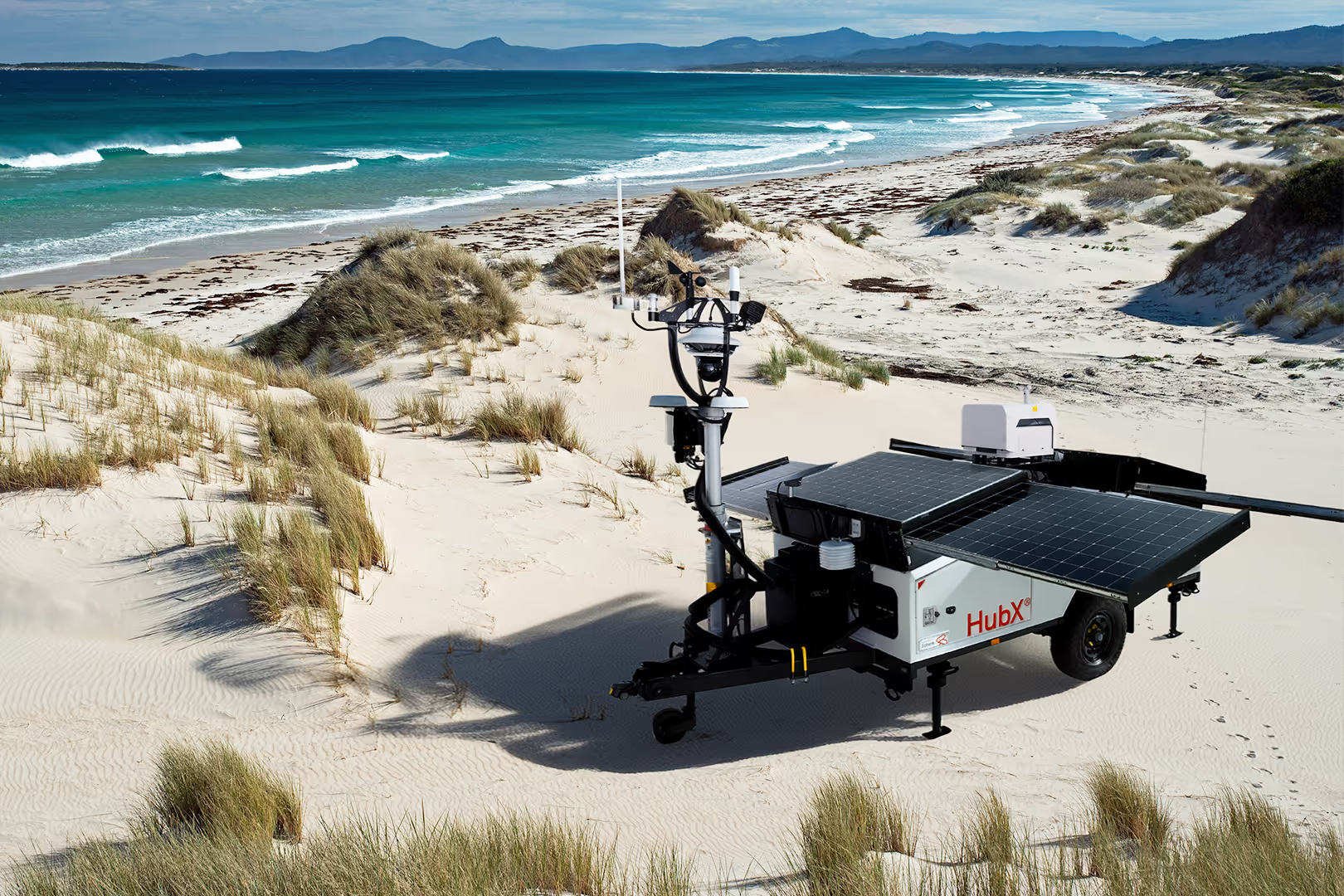
HubX and HubT are permanently installed autonomous systems that launch automatically, fly predefined patrol routes and stream live video back to a central remote operations centre. From there, trained, CASA-approved pilots monitor multiple beaches simultaneously, helping detect sharks earlier and support faster warnings to on-ground lifeguards and surf lifesavers.

This model shifts shark detection from being:
to being:
One of the biggest constraints in expanding drone operations is regulation.
Sphere holds approval for Broad Area BVLOS (Beyond Visual Line Of Sight) Self-Assessment operations, allowing drones to be operated safely beyond the pilot’s line of sight across large areas.
“Regulatory readiness is often the biggest bottleneck,” Cockinos said. “That work is already done. The pathway to safe, compliant BVLOS operations is in place, which means solutions like HubX and HubT can be deployed far faster than many realise.”
This approval significantly reduces the time required to deploy autonomous systems at scale, removing the need for repeated site-by-site approvals and enabling faster response to emerging risk.
In practical terms, it means coast-wide deployment is achievable now, not years away.

Under this model, HubX and HubT units could be installed at intervals along the NSW coastline, providing overlapping daylight coverage across hundreds of kilometres of coastline, with priority focus on key high-use and higher-risk beaches.
Drones would operate on scheduled patrols during peak swimming periods, with the ability to scale rapidly during higher-risk conditions such as school holidays or following major rainfall events.
Alerts would flow directly to on-ground lifeguards and surf lifesavers, supporting faster warnings, targeted closures, and better-informed decisions, without replacing existing programs.
Sphere designs, engineers and manufactures its HubX and HubT systems in Australia, with operations and a remote operations centre based in NSW. This enables rapid deployment, local support, and sovereign control of safety-critical infrastructure.
These systems are already operational in complex, regulated environments where reliability and compliance are essential.
This isn’t about trials or future concepts.
It’s about using capability that already exists to better protect people where risk is increasing.
Beach safety should remain a public good, supported by collaboration between government, surf lifesaving organisations, and capable Australian industry partners.
As conditions change, so too must the systems designed to keep people safe.
Sphere remains ready to work with the NSW Government to scale what already works, faster, further, and where it matters most.


