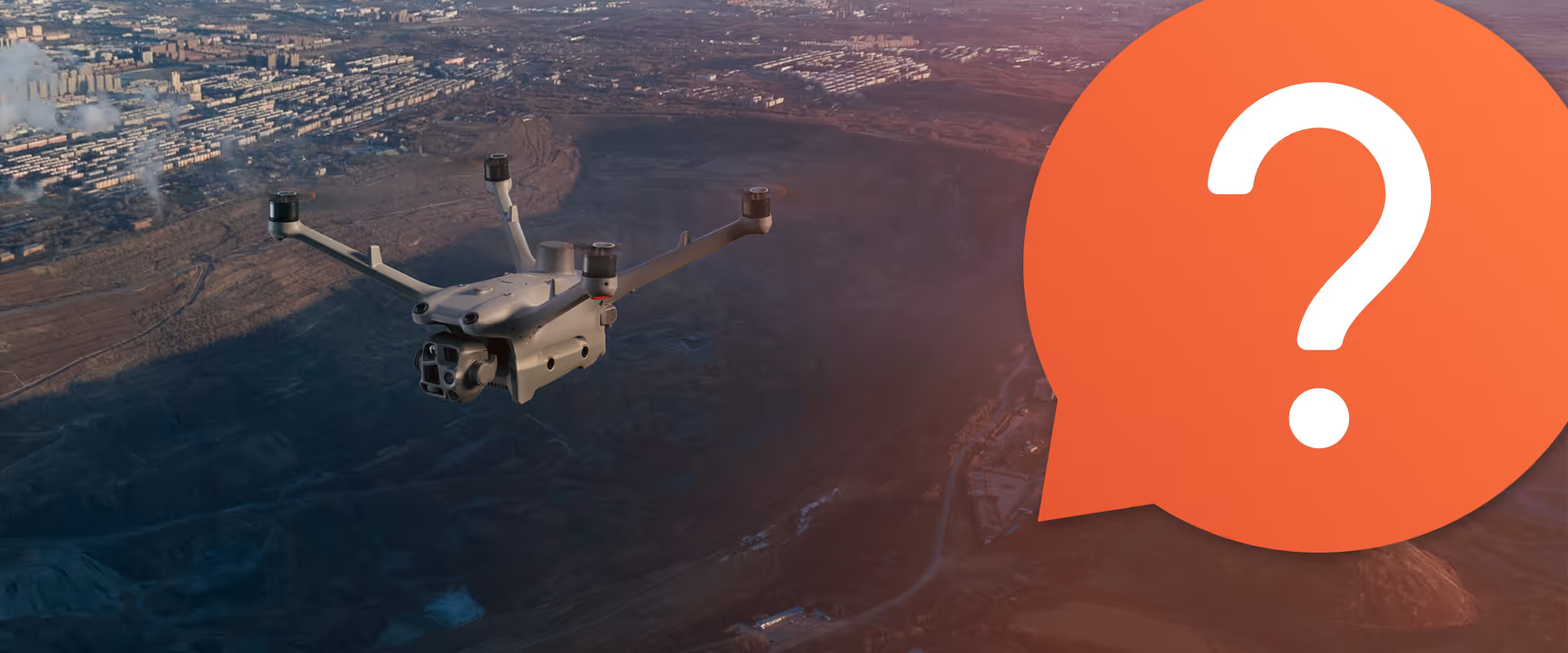
DJI Matrice 5T
Inspection and search and rescue for utilities and emergency services, with high-resolution thermal in a folding design.
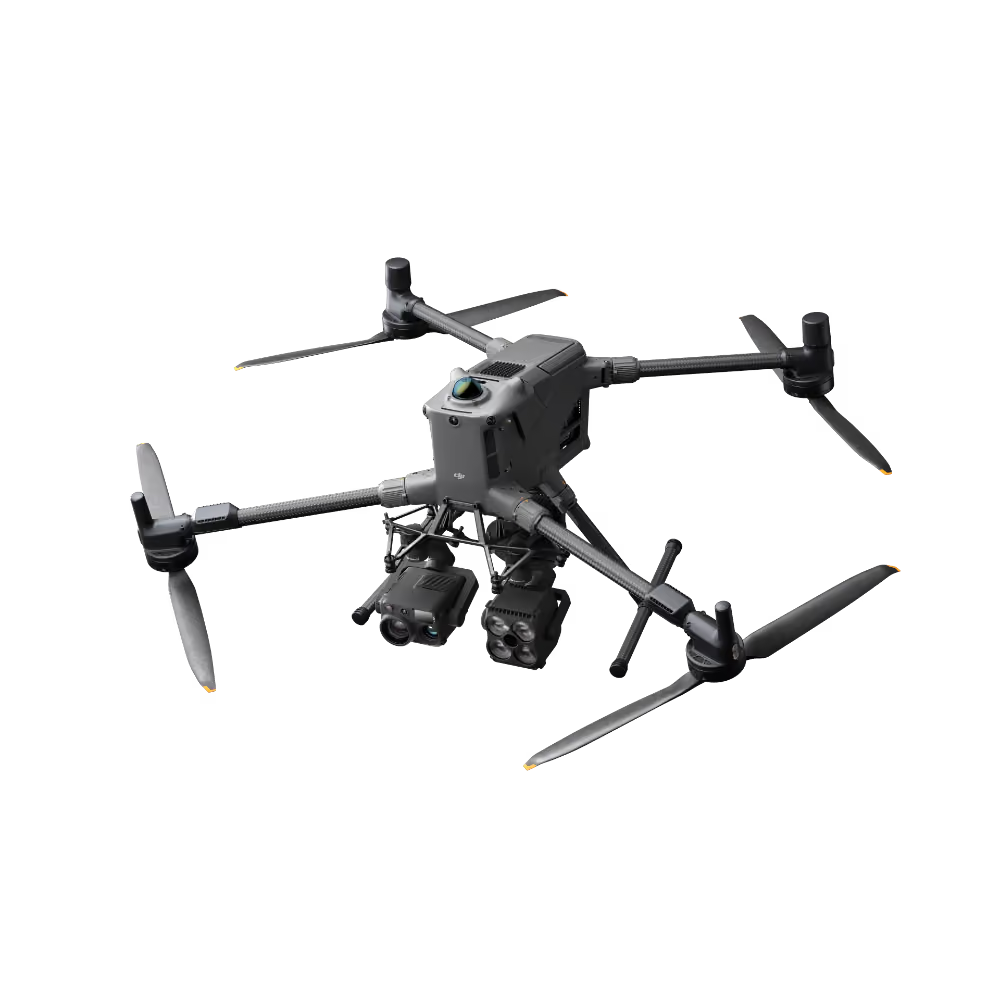
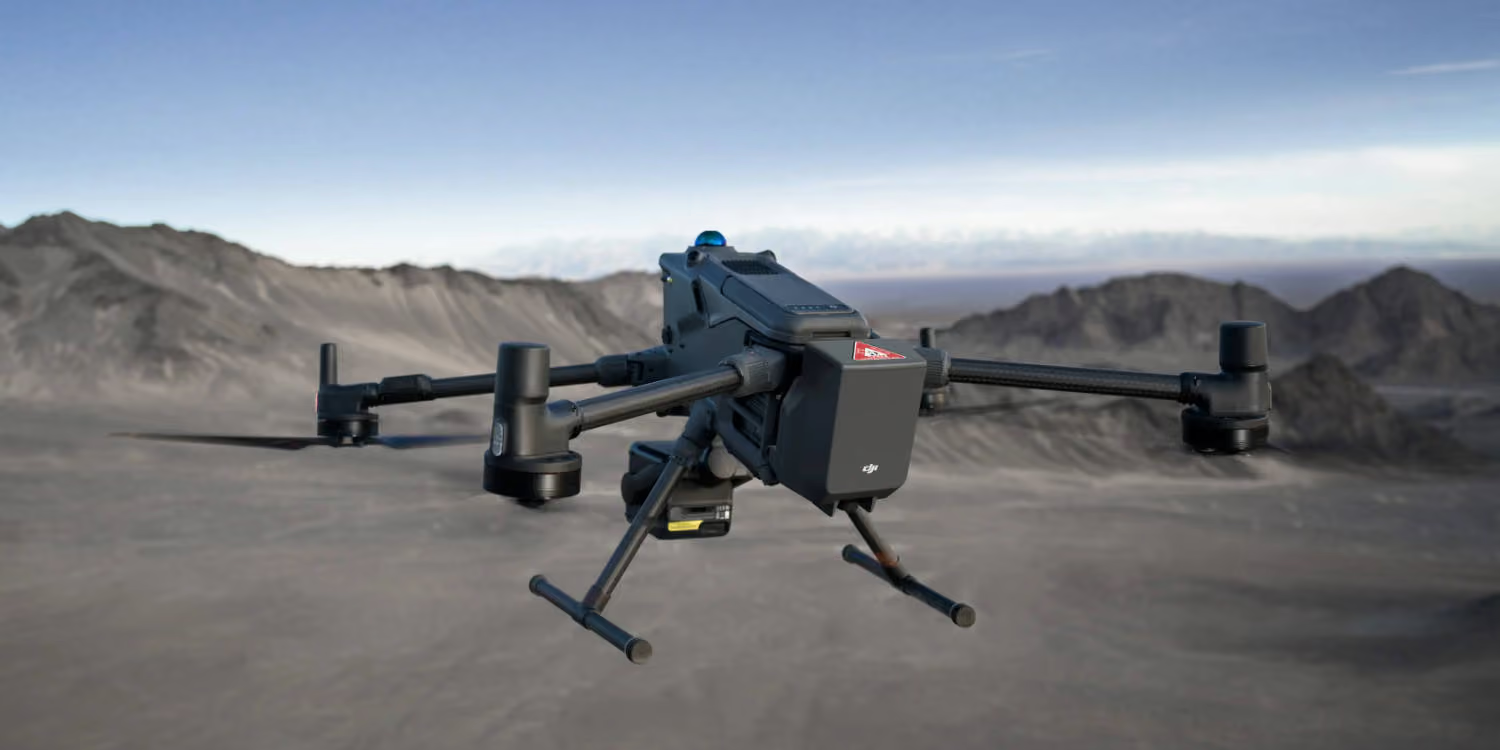
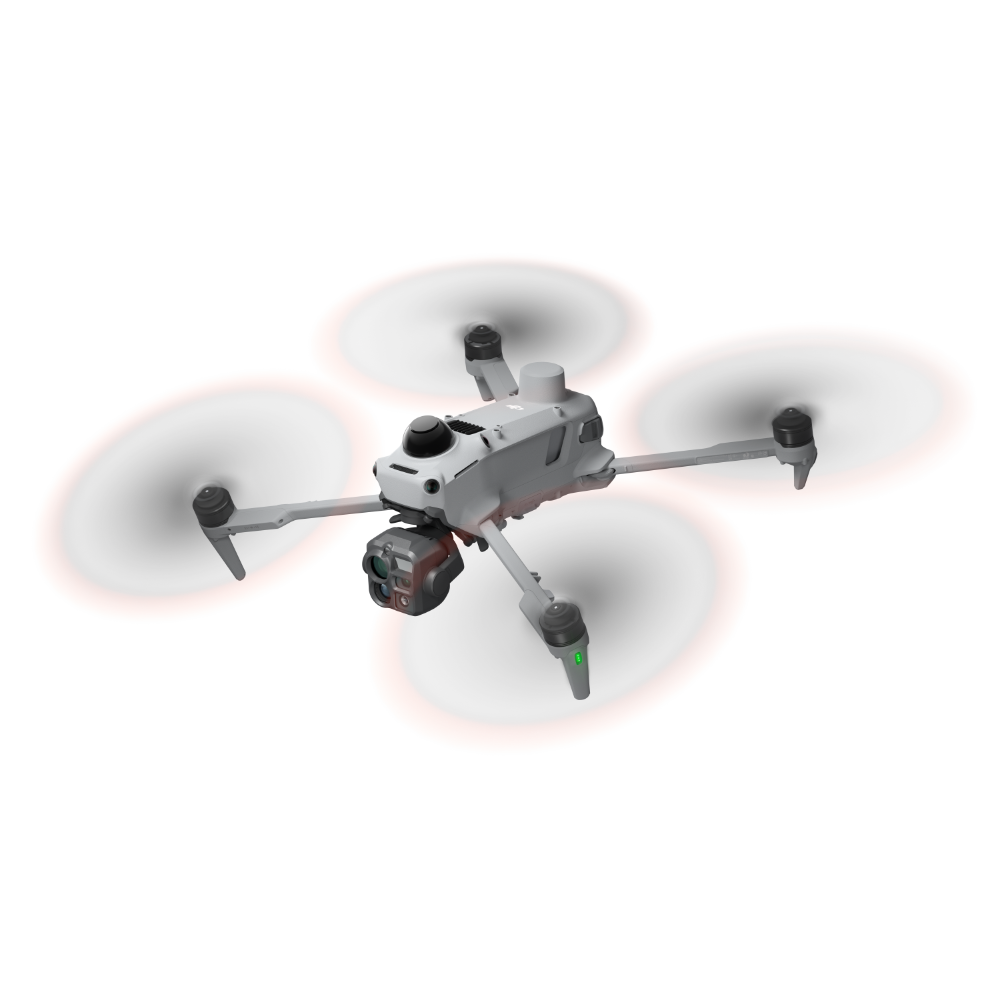
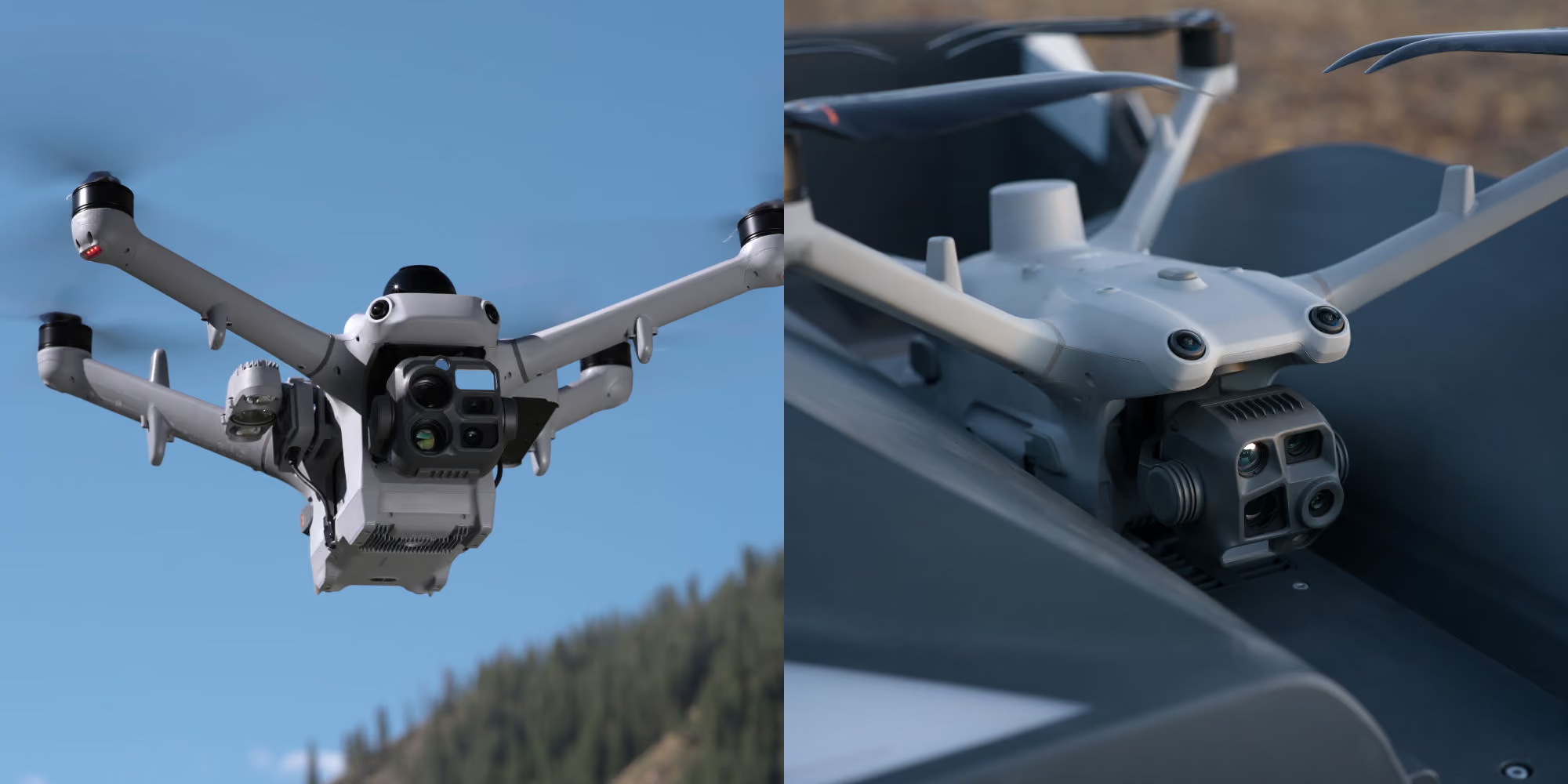
The DJI Matrice 5T is the manually flown version of the Matrice 5TD, the aircraft inside DJI Dock 4. It carries the same 1280 × 1024 thermal camera, wide and zoom cameras and 3 km laser rangefinder, but your pilot flies it from a remote controller, so your team can launch wherever the job is.
Thermal and zoom in your crew's hands
Pack it in the ute and launch on site in minutes. One flight gives you the thermal picture, the close-up detail and the coordinates of what you've found.
Goes where the job is
No dock or site install. Your pilot takes it to the asset, the incident or the search area, wherever that is on the day.
Faster answers
Find a hot bearing, a damaged insulator or a missing person from the air, without walking the site or waiting on a ground search.
Detail from a safe distance
176x hybrid zoom and a 3 km laser rangefinder let you inspect and locate targets without getting close to live or unstable assets.

Safer work
Fewer people working at height, near live assets or searching rough terrain on foot.
DJI Matrice 5T for mining, utilities and emergency services
Thermal inspection and search capability your crews can carry to sites that are big, remote and hard to get to.
Mining
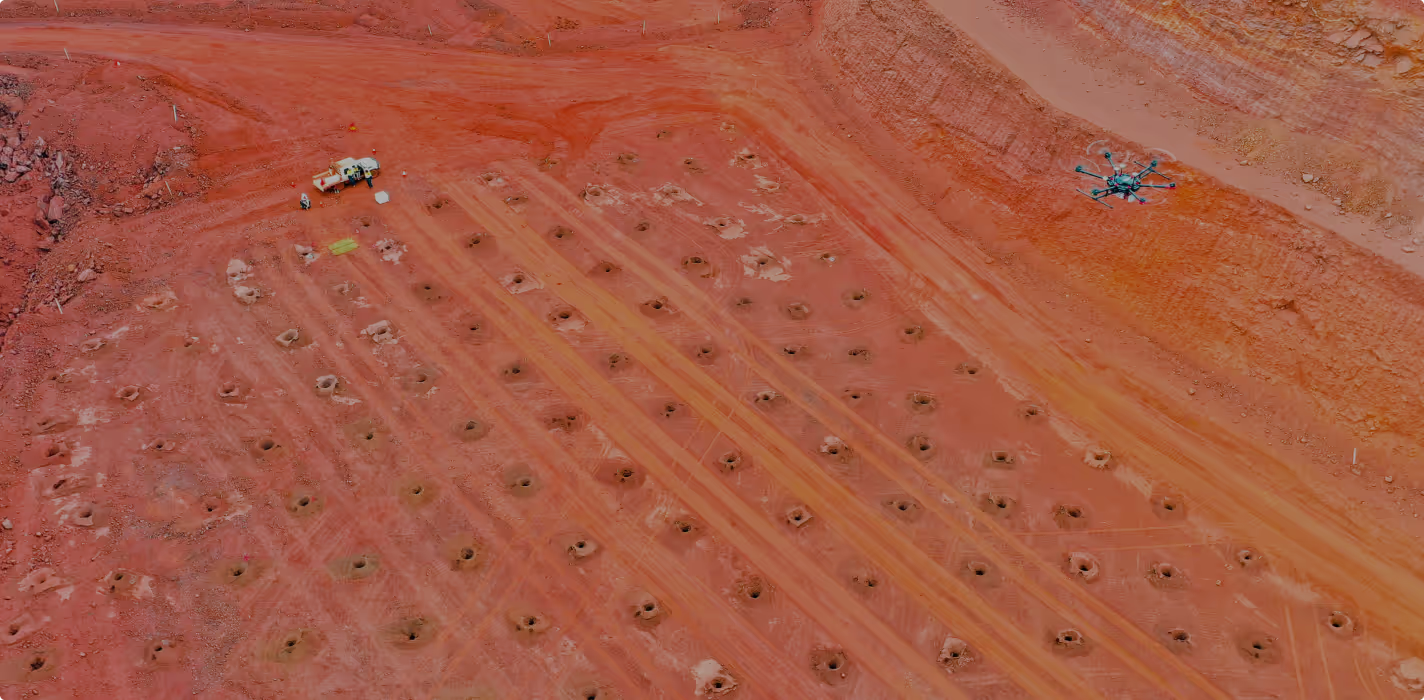
Fly thermal and zoom inspections of conveyors, crushers, pipelines and fixed plant without sending crews into the pit or up a structure. The 1280 × 1024 thermal camera picks up hot idlers and bearings early, and 11x zoom gets close detail from a safe distance.

Utilities and infrastructure
Inspect substations, transmission lines and pipeline corridors on demand, or follow up quickly after a storm or fault. Rotating LiDAR and mmWave radar help the aircraft sense power lines, so your pilot can work near the network with more confidence.
Search and rescue and emergency response
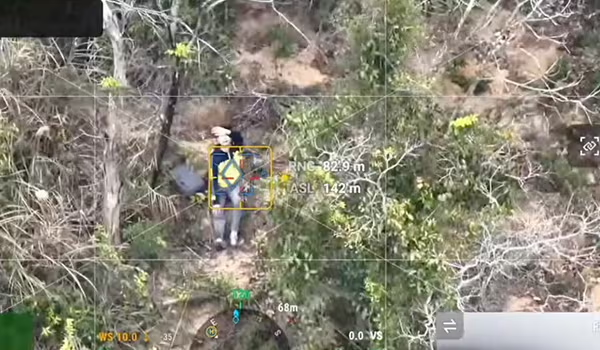
Thermal and full-colour night vision help find people and hotspots in the dark, through smoke or across thick bush, and 176x hybrid zoom can read a licence plate from 400 m. Add the optional spotlight and speaker to light up a scene and talk to people on the ground.
Thermal & zoom built in
1280 × 1024 thermal, plus wide, 3x and 11x zoom cameras.
Built for dust, heat & rain
Aircraft rated IP55, operating from −20 °C to 50 °C.
Sees in the dark
Full-colour night vision down to 0.01 lux on the wide camera, and monochrome night vision on the 11x tele.
Up to 59 minutes in the air
Enough range to reach a target 3 km away in under 3 minutes.
Built for heat, dust and remote Australian sites

Matrice 5T
The Matrice 5T carries four cameras: 1280 × 1024 thermal, a 50 MP wide camera, and 3x and 11x zoom cameras with up to 176x hybrid zoom. A laser rangefinder measures out to 3 km, so one flight gives you the thermal picture, the close-up and the coordinates.
A 360° LiDAR picks up wires from 32 m away, backed by forward, upward and downward mmWave radar and all-round full-colour vision, and built-in ADS-B and Remote ID receivers flag other aircraft nearby. It's rated IP55 and operates from −20 °C to 50 °C, so dust and summer heat don't ground it.
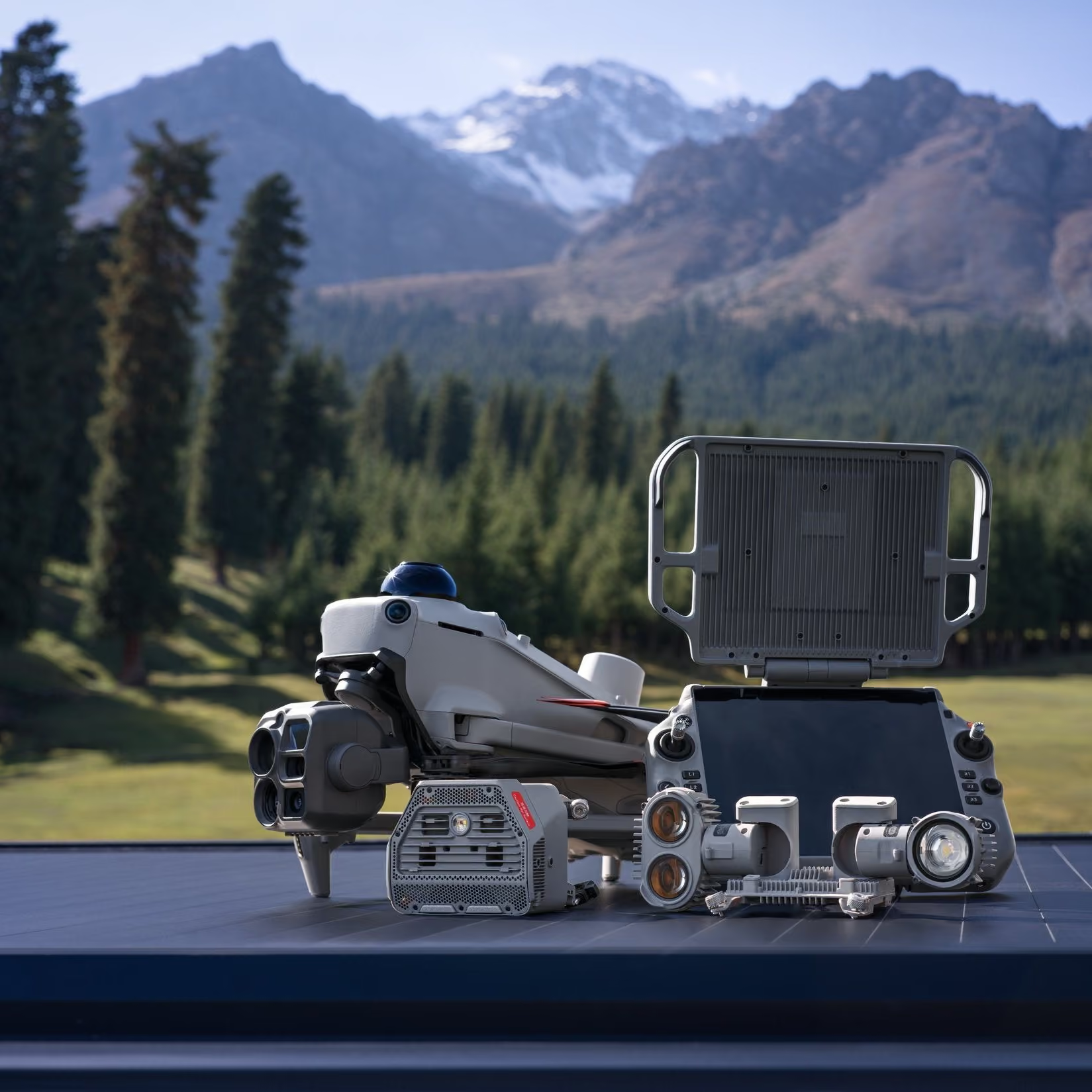
Remote controller and accessories
Your pilot flies the Matrice 5T from the DJI RC Plus 3 Enterprise (sold separately), with a 7.44-inch, 2000-nit screen that stays readable in full sun. DJI O4 Enterprise transmission reaches up to 20 km under Australian (CE) conditions, with sub-2 GHz anti-interference, relay mode and dual built-in 4G as backup.
Carry up to 400 g of accessories, including the AL2 spotlight with integrated spot and flood lights and the AS2 speaker with a built-in warning light. A 515W charging hub keeps batteries turning over between flights.
Ready to automate?
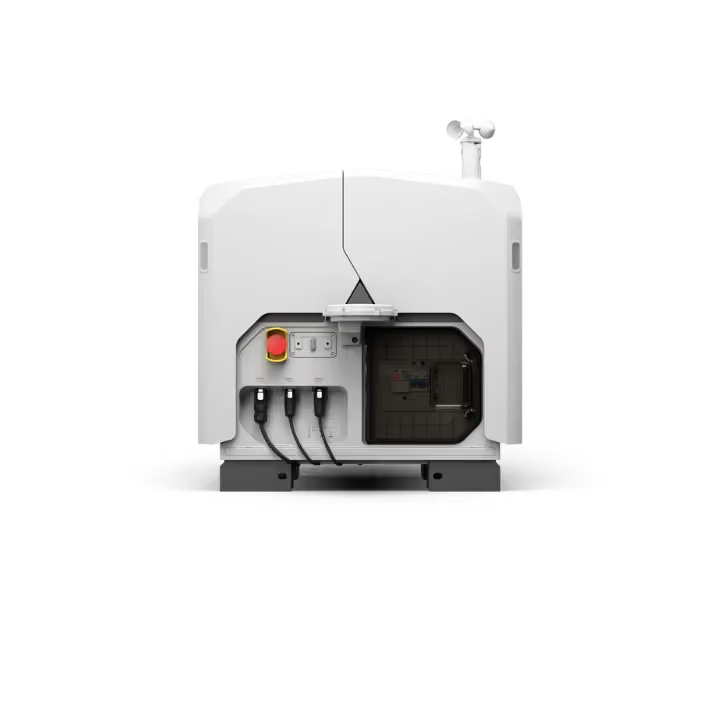
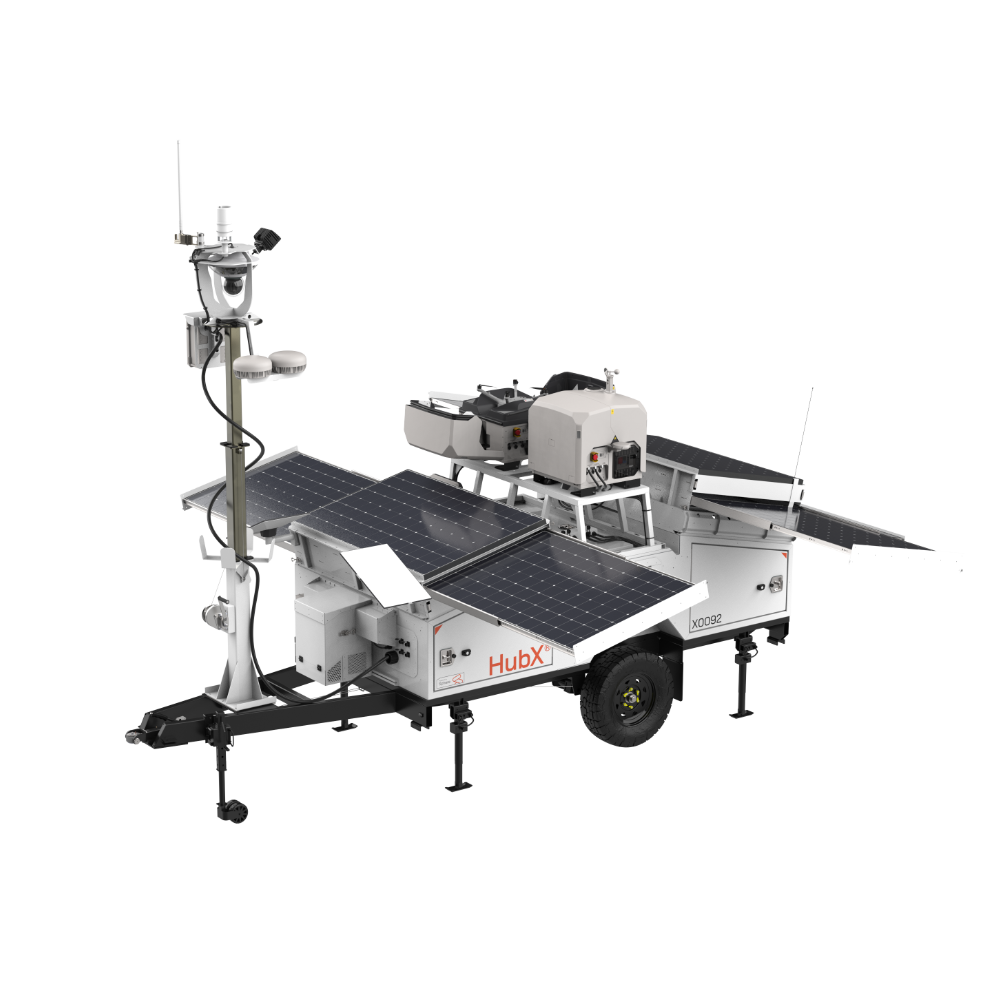
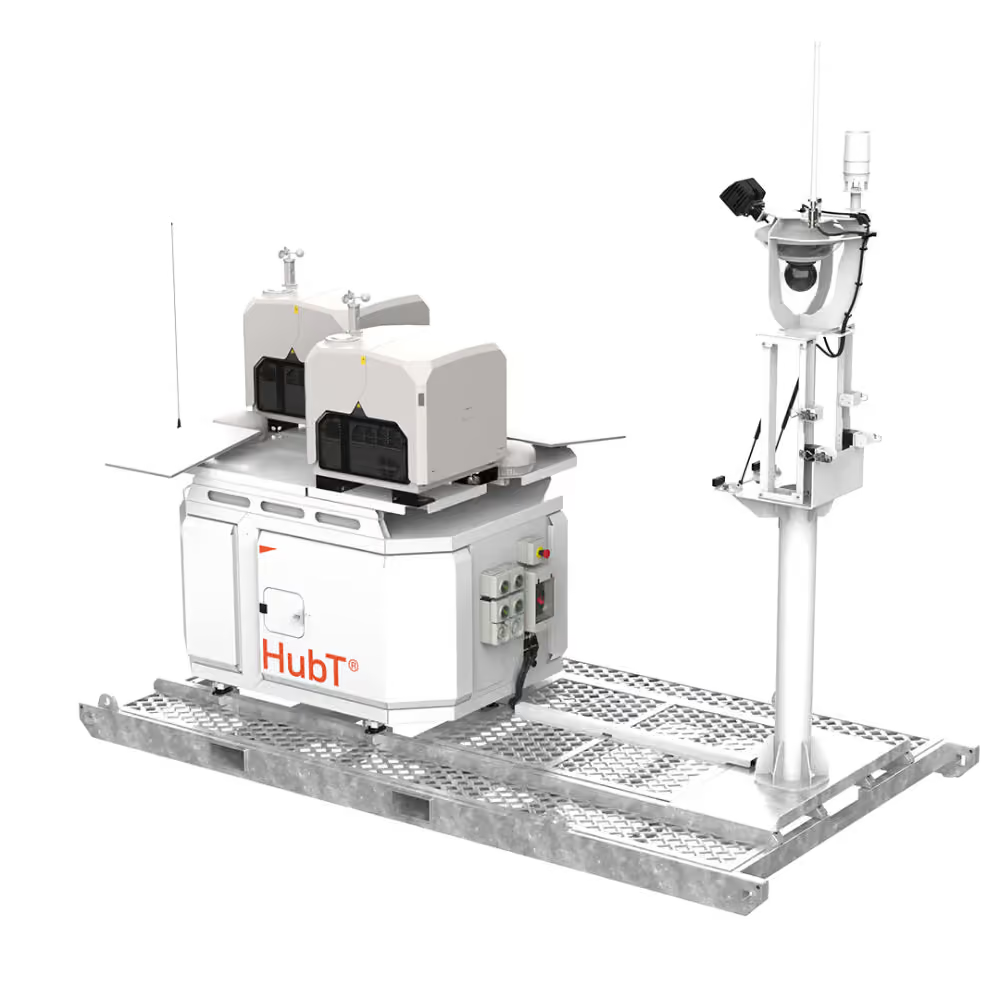
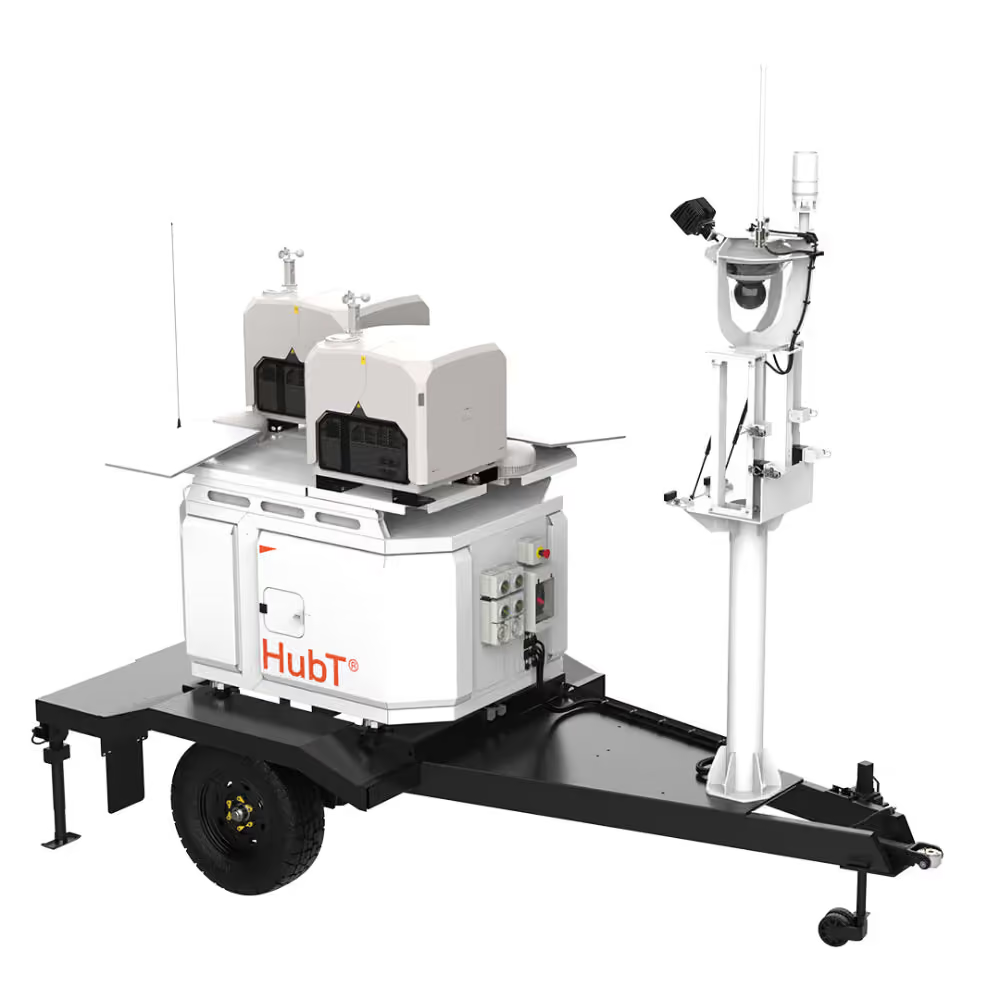
When flying the same routes every week becomes the bottleneck, DJI Dock 4 with the Matrice 5TD runs those flights automatically. Our Hubs add the power and connectivity a dock needs, as the off-grid HubX® trailer or the more permanently installed HubT®, and can be fully managed from our Sydney-based Remote Operations Centre.
From planning to data delivery, in one platform
Compliance and mission planning with CuroRPA
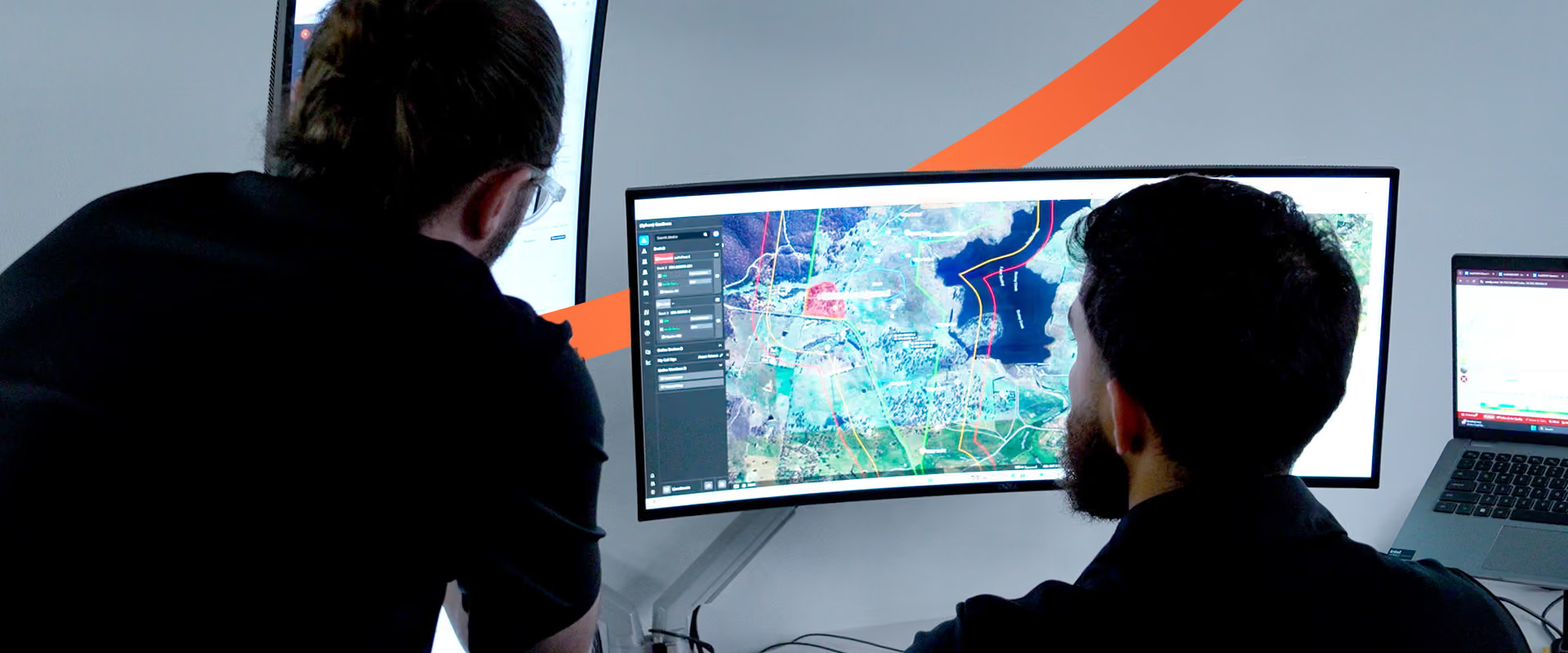
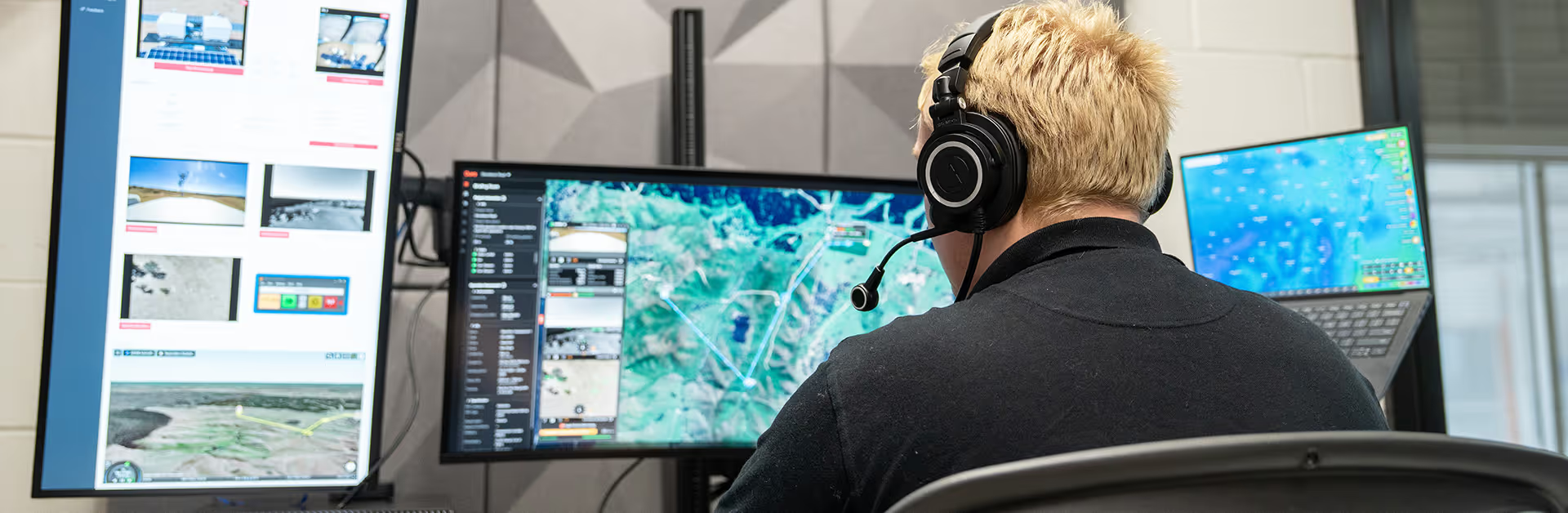
CuroRPA is where your Matrice 5T operations are planned and managed. Plan missions, manage your pilots and aircraft, and keep the flight records your ReOC depends on in one place. It enforces your operator's own rules on every flight, in line with CASA standards, so compliance is built into the work rather than chased afterwards.
Prefer DJI FlightHub 2?
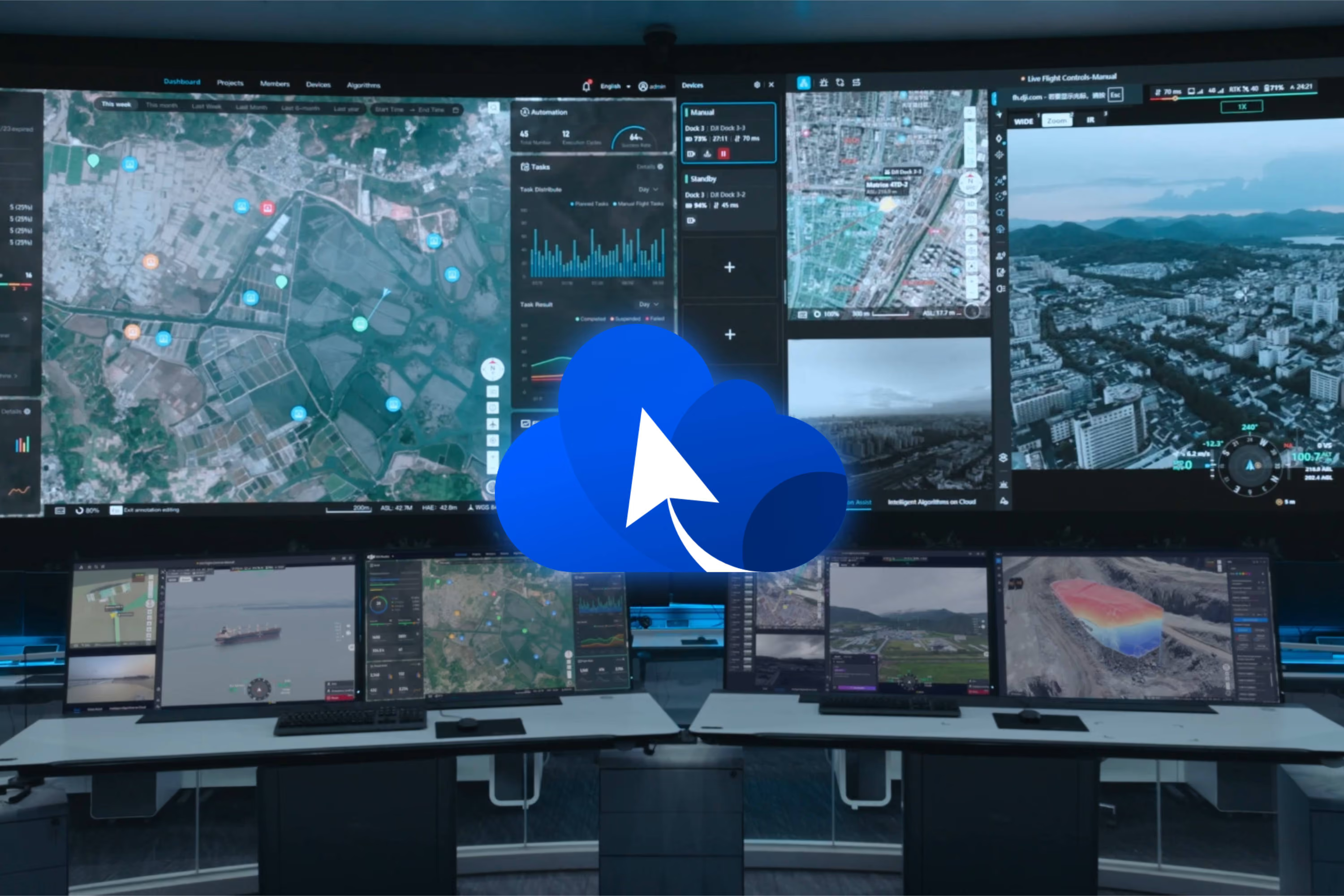
The Matrice 5T also works with DJI FlightHub 2. Stream live video to people back at base or in the incident control room, while onboard AI detects more than 20 target types as you fly and can run third-party algorithms.

What you need to operate the Matrice 5T
Flying it well takes more than the hardware. Here's what's involved, and where we can help.

Training
Pilots need a Remote Pilot Licence (RePL), and the business running the flights needs a ReOC.
How we help: RePL, ReOC, Chief Remote Pilot and BVLOS training, tailored to your team.
CASA approvals
Night, BVLOS and flights near people need extra CASA approval. Built-in ADS-B and Remote ID receivers help your pilot keep track of other aircraft.
How we help: we hold a ReOC and BVLOS broad area approval, so we can fly it for you.
Batteries and kit
Enough Matrice 5 Series batteries to cover a full shift, the 515W charging hub in the vehicle or at the depot, and a rugged case for the trip to site. Batteries don't hot-swap, but the aircraft is ready to take off again as little as 10 seconds after a battery change.
How we help: we'll put together a kit that matches your shifts and sites.
DJI Matrice 5T pricing and availability in Australia
Buy the aircraft and fly it yourself, add our help to get your team up and running, or let us run operations for you.

DJI Matrice 5T
- Matrice 5T aircraft
- DJI RC Plus 3 Enterprise
Set-up, training and support
- Kit recommendation
- Aircraft set-up and configuration
- Operator training
- Ongoing support
Managed Hub
- HubX or HubT system
- 24/7 operations from our Remote Operations Centre
- Data delivered to you
Final price depends on your setup and add-ons.
Matrice 5T or DJI Dock 4?
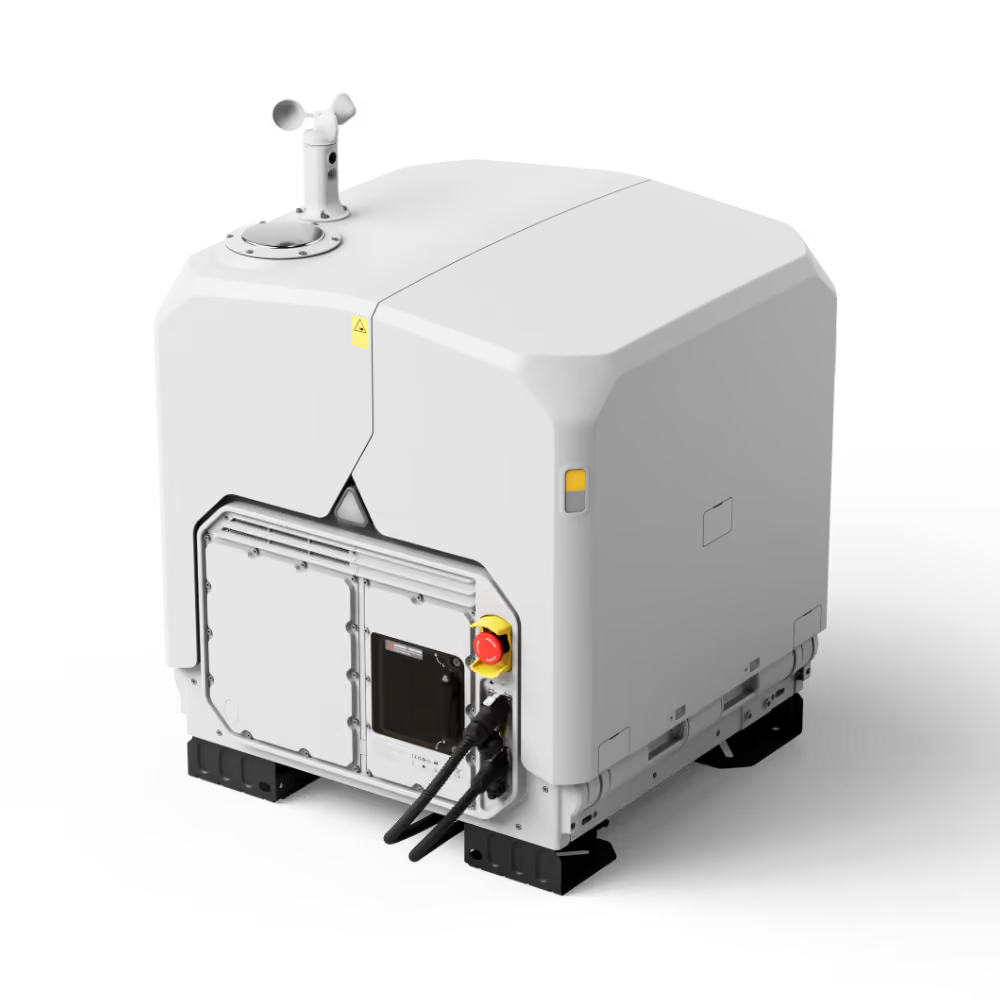
Same cameras, two ways to fly. Choose based on how often you fly the same job.
Want the full breakdown? Read more
Buying guides and comparisons
Take the detail away with you, or share it with the people signing off.
DJI Matrice 5 Series vs Matrice 4 Series Technical Comparison
DJI Matrice 5 vs Matrice 4 compared: manually flown and dock models, thermal, cameras, sensing and safety, and which aircraft suits inspection, response or mapping in Australia.
Read the guide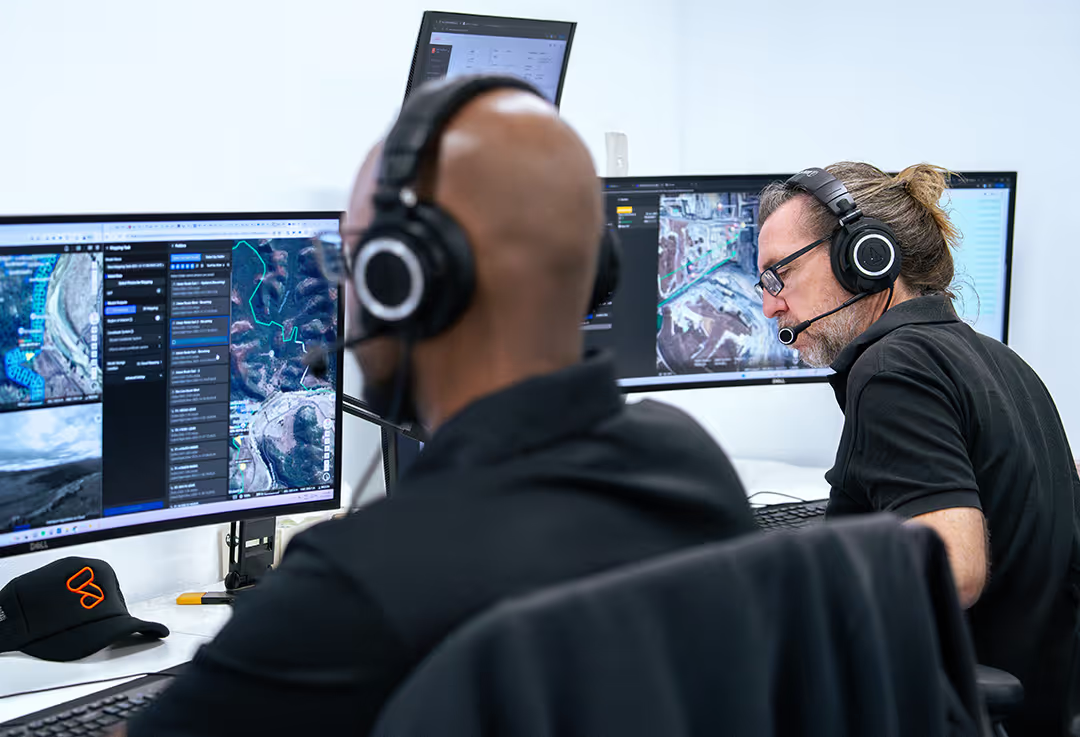
We don’t just sell drones. We turn data into better decisions.

Approved to fly for you
We hold a CASA ReOC and Broad Area BVLOS Approval, so we can run operations for you under our own approvals.

Operators, not just resellers
Our team runs remote operations every day from our Remote Operations Centre, our 24/7 Sydney-based operations centre.

Local support for the long haul
Training and setup from our Australian team, with servicing and support for the life of your fleet.

Our own hardware and software
We design and build our Hubs and Curo software in Australia, so you can grow from one drone to automated operations.
Specifications
- Cameras: Thermal, 50 MP wide, 3x medium tele and 11x tele
- Flight time: Up to 59 min
- Thermal camera: 1280 × 1024 (2560 × 2048 UHR mode)
- Zoom: 11x telephoto, up to 176x hybrid zoom
- Laser rangefinder: Up to 3 km
- Ingress rating: Aircraft rated IP55, operating from −20 °C to 50 °C, so dust and summer heat don’t ground it.
- Transmission: Up to 20 km (CE) via DJI O4 Enterprise, plus dual built-in 4G
- Top speed: 23 m/s
- Accessory payload: Up to 400 g (AL2 spotlight, AS2 speaker)
Full Matrice 5T specifications
Aircraft: General
- Takeoff weight: 2239 g (with battery, propellers and microSD card)
- Max takeoff weight: 2639 g
- Dimensions: Unfolded 408×507×191 mm; folded 335×155×203 mm (L×W×H, with landing gear and gimbal)
- Diagonal wheelbase: 572 mm
- Max ascent / descent speed: 10 m/s / 8 m/s
- Max horizontal speed: 23 m/s forward, 20 m/s backward, 19 m/s sideways (Sport mode)
- Max wind speed resistance: 12 m/s (takeoff and landing)
- Max takeoff altitude: 7000 m; 4500 m with accessories
- Max flight time: 59 min (no wind)
- Max hovering time: 54 min (no wind)
- Max payload: 400 g
- Max flight distance: 45 km (no wind)
- Max pitch angle: 32°
- RTK accuracy (RTK fix): 1 cm + 1 ppm horizontal; 1.5 cm + 1 ppm vertical
- GNSS: GPS, Galileo, BeiDou, QZSS, GLONASS
- Hovering accuracy: Vertical: ±0.1 m (vision), ±0.5 m (GNSS), ±0.1 m (RTK); horizontal: ±0.3 m (vision), ±0.5 m (GNSS), ±0.1 m (RTK)
- Operating temperature: −20 °C to 50 °C
- Ingress protection rating: IP55
- Propellers: 14.2-inch (1460F)
- Beacon: Built into the aircraft
- Accessory ports: E-Port × 3 (official and third-party accessories)
- Remote controller: DJI RC Plus 3 Enterprise: 7.44-inch 1920×1440 screen, 2000 nits; 6933 mAh battery; IP54; 1240 g
Aircraft: Sensing
- Sensing type: 6-directional fisheye vision; horizontal rotating LiDAR; forward, upward and downward mmWave radar; downward ToF infrared sensor
- Forward vision: Measurement 0.15–12 m; detection 0.15–200 m; FOV 90° H, 130° V; avoidance up to 21 m/s
- Backward and lateral vision: Backward: measurement 0.15–12 m, FOV 90° H, 126° V. Lateral: measurement 0.18–8 m, FOV 90° H, 90° V. Detection to 200 m; avoidance up to 21 m/s
- Upward sensing: mmWave radar detects small obstacles to 20 m; avoidance up to 10 m/s
- Downward vision: Measurement 0.13–8 m; detection 0.25–200 m; FOV 150° × 150°; avoidance up to 8 m/s
- Rotating LiDAR range: 110 m (10% reflectivity, 100,000 lux); power lines: 32 m (21.6 mm steel-core aluminium wire), 19 m (11 mm contaminated insulated wire); obstacle avoidance 0.5–32 m
- Rotating LiDAR FOV: 360° horizontal, 59° vertical; 250,000–460,000 points/s; 940 nm, Class 1
- Downward ToF infrared: Built in, for low-altitude and landing sensing
- mmWave radar: FOV 90° × 90°; forward 40 m, up and down 20 m (10 mm black insulated wire)
Aircraft: Video transmission
- System: DJI O4 Enterprise Enhanced Video Transmission System
- Live view quality: 3-channel 1080p/30fps
- Max transmission distance: 20 km (CE/SRRC/MIC), 40 km (IC), unobstructed with no interference
- Real-world range (CE): Strong interference 0.7–3 km; medium 3–7 km; weak 7–20 km
- Max download speed: 20 MB/s
- Lowest latency: 130 ms
- Antenna: 6 SDR, 2 sub-2G, 4 × 4G and 1 Wi-Fi antenna; 2T4R
- 4G: Two built-in DJI Cellular Dongle 2 modules; dual SIM (eSIM and nano-SIM)
Aircraft: Storage
- Supported cards: U3/Class 10/V30 or above microSD
- Recommended cards: Lexar Professional SILVER PLUS 64 GB, 128 GB, 256 GB, 512 GB
Aircraft: Battery
- Capacity: 10073 mAh
- Voltage: 21.36 V (max charging voltage 25.8 V)
- Cell type: Li-ion 6S
- Energy: 215.2 Wh
- Weight: 768 g
- Cycle count: 200
- Charging temperature: 5 °C to 40 °C (self-heating for low-temperature charging)
- Discharge rate / max charge rate: 4C / 1.8C
Aircraft: Gimbal
- Stabilisation: 3-axis mechanical (tilt, roll, pan)
- Mechanical range: Tilt −145° to +125°; roll −53° to +53°; pan −75° to +75°
- Controllable range: Tilt −90° to +90°; pan not controllable from the remote controller
- Angular vibration range: ±0.007°
- Max control speed (tilt): 100°/s
Aircraft: Visible cameras
- Wide-angle camera: 1/0.98-inch CMOS, 50 MP; 85.7° FOV; 23.5 mm equivalent; f/1.8
- Medium tele camera: 1/1.28-inch CMOS, 50 MP; 35° FOV; 70 mm equivalent; f/2.88
- Tele camera: 1/1.5-inch CMOS, 50 MP; 9.7° FOV; 252 mm equivalent; f/2.8
- Zoom: 16× digital on tele (176× hybrid)
- Focus range: Wide 0.6 m to ∞; medium tele 3 m to ∞; tele 5 m to ∞
- ISO range: Normal: 100–25600; Night Scene: 100–1638400
- Shutter speed: 2 to 1/8000 s
- Max image size: 8192×6144
- Minimum photo interval: 0.5 s
- Panorama: Approx. 110 MP (stitched, wide-angle)
- Video: H.265, 4K 3840×2160@30fps or FHD 1920×1080@30fps, 40 Mbps; MP4, TS
- Photo format: JPEG, DNG (RAW)
Aircraft: Infrared thermal camera
- Thermal imager: Uncooled VOx microbolometer, 8 μm pixel pitch
- Resolution: 1280×1024 at 30 Hz (UHR mode: 2560×2048)
- Lens: 45° DFOV; 53 mm equivalent; f/0.85; focus 10 m to ∞
- Sensitivity: ≤ 50 mK at f/1.0, 25 °C
- Temperature measurement: Spot and area
- Temperature range: High gain: −20 °C to 150 °C; low gain: 0 °C to 550 °C
- Temperature accuracy: High gain: ±2 °C or ±2%; low gain: ±5 °C or ±3% (whichever is greater)
- Digital zoom: 32×
- Infrared wavelength: 8–14 μm
- Palettes: White Hot, Black Hot, Tint, Iron Red, Hot Iron, Arctic, Medical, Fulgurite, Rainbow 1, Rainbow 2
- Photo format: JPEG (8-bit); R-JPEG (16-bit); DLT-664
- Video: MP4; 12 Mbps (1280×1024@30fps), 24 Mbps (2560×2048@30fps)
- UHR Infrared Image: 2560×2048 at 30 fps (on); 1280×1024 (off)
Aircraft: NIR auxiliary light and laser rangefinder
- NIR auxiliary light FOV: 5.2° to 6.6°
- Laser range: 3000 m normal incidence; 1200 m oblique (1:10); 1 m blind zone
- Laser accuracy: < 0.1 m within 12 m; < 0.3 m at 12–100 m; < 1 m at 100–3000 m; random error < 0.1 m (1σ)
- Laser safety: Class 1 (IEC 60825-1:2014)
Accessories: AL2 Spotlight
- Weight and dimensions: 175 g; unfolded 200×78×58 mm, folded 104×82×58 mm
- Max power: 60 W
- Illuminance at 100 m: Spot 10.0 lux; flood 2.5 lux
- Coverage at 100 m: Spot 500 m² (14.5°); flood 1500 m² (24.5°)
- Modes: Lighting and strobe
- Gimbal: Tilt −90° to +90° controllable
- Operating temperature and rating: −20 °C to 50 °C; IP55
Accessories: AS2 Speaker
- Weight and dimensions: 194 g; 96×70×66 mm
- Max power / volume: 35 W; 120 dB at 1 m
- Effective broadcast distance: 400 m
- Broadcast modes: Real-time (with echo suppression), recorded, media import, text-to-speech
- Strobe colours: Red, blue, green, white, yellow; IP55
Frequently asked questions
How much does the DJI Matrice 5T cost in Australia?
Your price depends on set-up, training and any add-ons. Contact us for a current quote.
What's the difference between the Matrice 5T and Matrice 5TD?
They share the same cameras and sensors. The Matrice 5T is flown by a pilot with a remote controller, while the Matrice 5TD is built for DJI Dock 4 and only flies automated missions from the dock.
Is the DJI Matrice 5T available in Australia?
Yes. DJI released the Matrice 5T in November 2026, and Sphere supplies and supports it across Australia. Contact us for current pricing and lead times.
Do I need CASA approval to fly the Matrice 5T?
Commercial flights need a RePL, and a ReOC for the business running them. Night, BVLOS and flights near people need further CASA approvals. Sphere holds a ReOC, BVLOS approval and a BVLOS broad area approval, so we can fly for you, or train your team and help you get your own approvals.
How is the Matrice 5T different from the Matrice 4T?
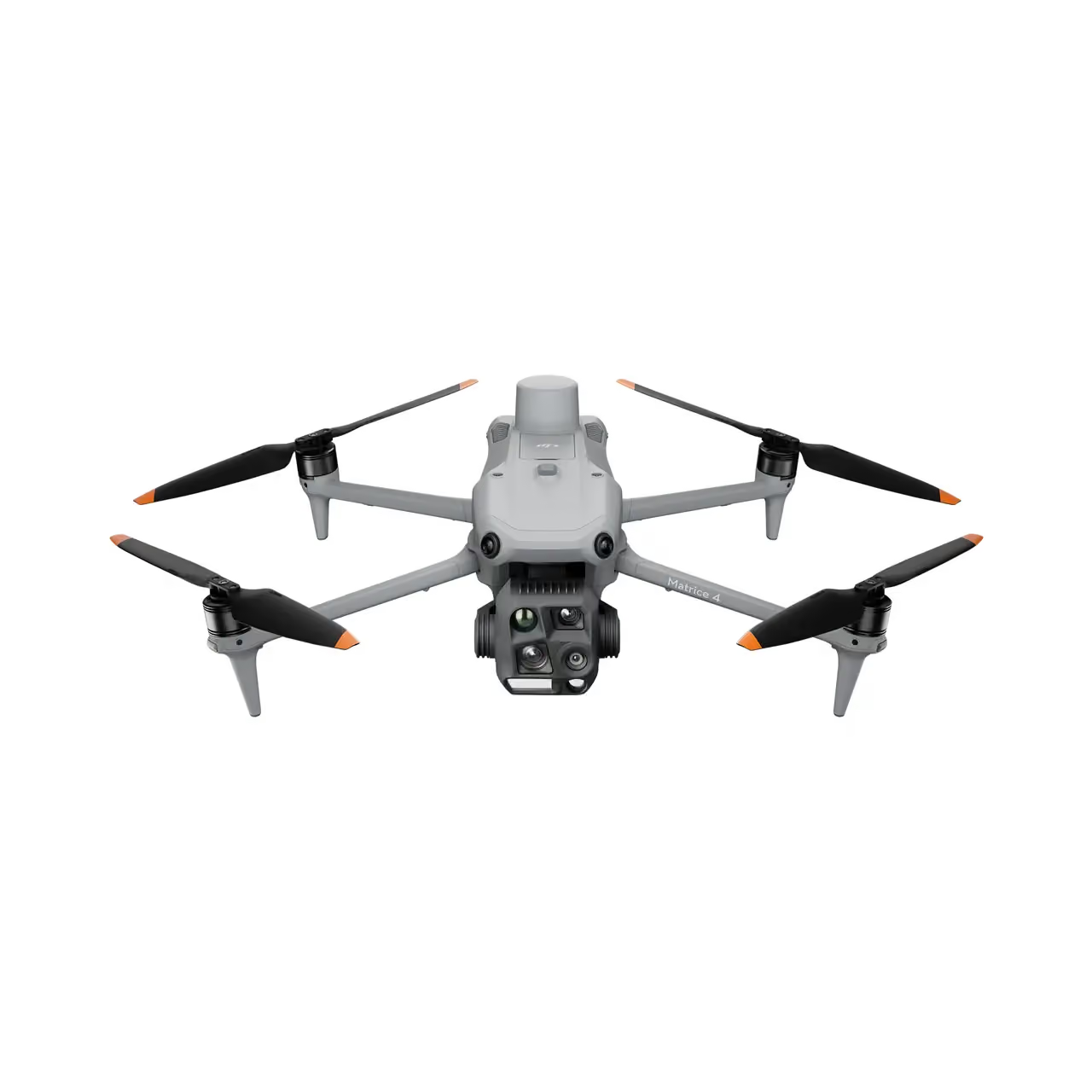
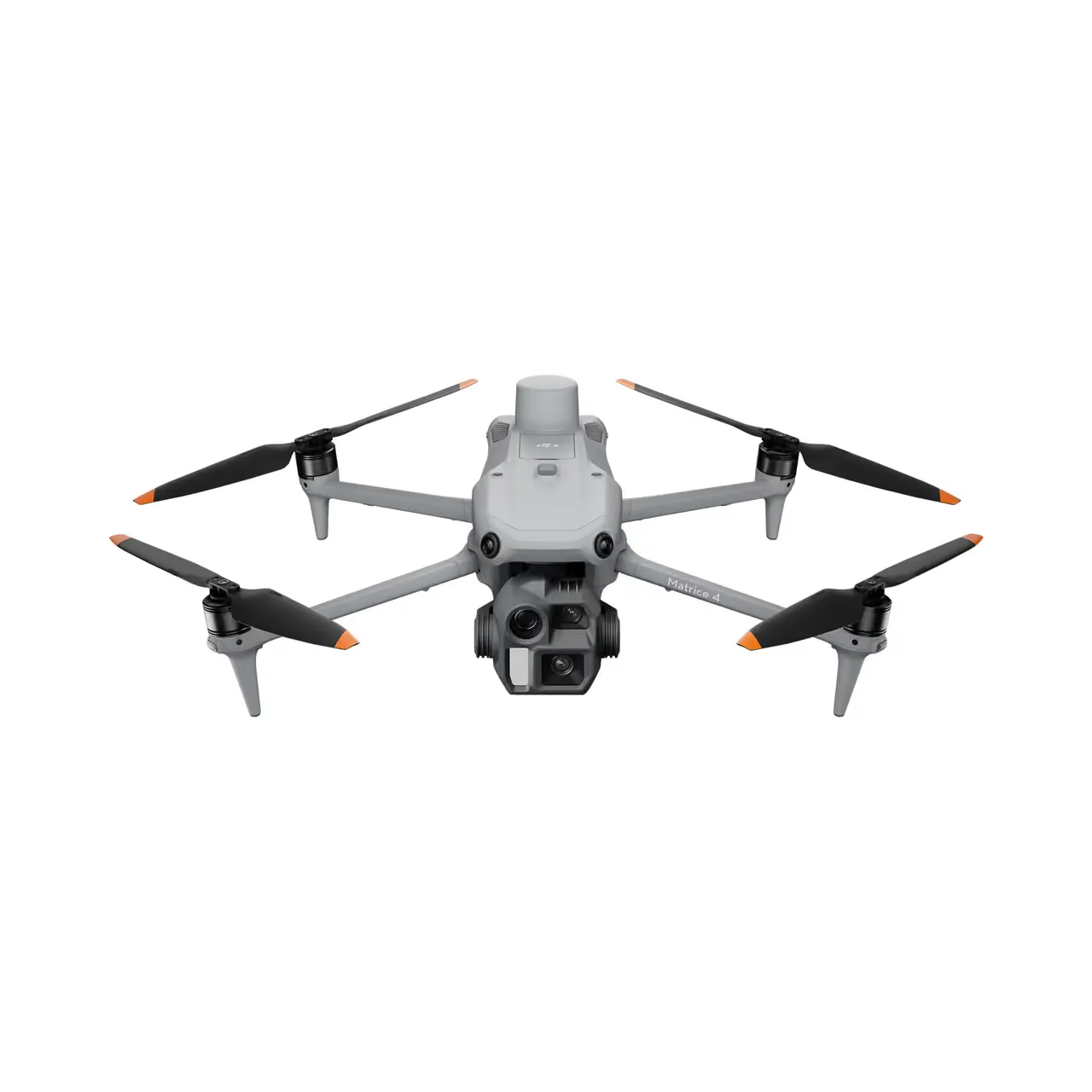
It steps up from 640 × 512 to native 1280 × 1024 thermal, flies for up to 59 minutes instead of 49, and its laser rangefinder reaches 3 km instead of 1.8 km. The tele camera stretches from 168 mm to 252 mm, max payload doubles to 400 g, and it adds LiDAR, mmWave radar and an IP55 rating.
Can the Matrice 5T be used for search and rescue?
Yes. The 1280 × 1024 thermal camera and full-colour night vision help find people in the dark or through smoke, the laser rangefinder gives you their coordinates, and the optional spotlight and speaker let you light the scene and talk to people on the ground.
What weather can the Matrice 5T fly in?
It operates from −20 °C to 50 °C, is rated IP55 and handles winds up to 12 m/s during takeoff and landing, so dust, rain and summer heat won't ground it.
Can the Matrice 5T fly automated missions from a dock?
No. DJI Dock 4 uses the Matrice 5TD, which carries the same cameras. Plenty of teams start with a pilot-flown Matrice 5T and add a dock once routine flights justify it.
Can the Matrice 5T map?
Yes, for fast-turnaround work. It delivers centimetre accuracy without ground control points, builds models on the controller in flight and can produce a map in as little as 8 minutes. For survey-grade work, the Matrice 4E or the Matrice 4D on DJI Dock 3 is still the better choice.
Who supports the DJI Matrice 5T in Australia?
Sphere supplies and supports the Matrice 5T across Australia, with training and servicing from our local team.
Can Sphere fly the Matrice 5T for me?
Yes. We hold our own CASA approvals and can run operations for you, or set you up with a managed Hub when you're ready to automate.
Does the Matrice 5T work with Curo?
Yes. The Matrice 5T works with Curo, so you can plan missions and get data to your teams in one software suite. Curo also runs DJI Dock 4 and our Hubs, so it's there when you're ready to automate.
Talk to us about this product
Tell us what you need to inspect or find, and where. We'll recommend the right setup for your team, whether you fly it yourself or have us operate it for you.
Prefer to talk? Call us on 1800 119 111.
(*Mandatory fields)