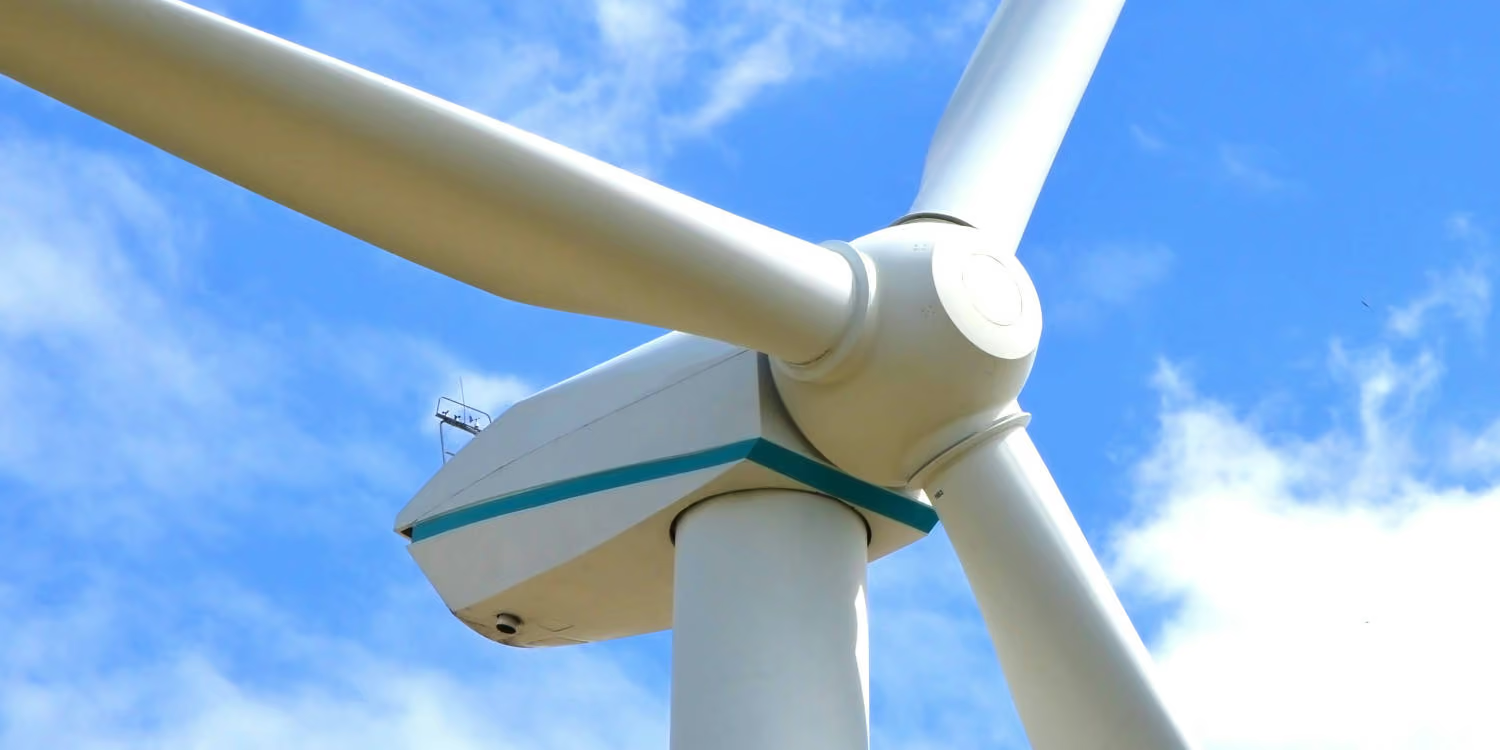
Wind operations run on blade condition. Blades carry the largest single repair bill on a wind farm, and damage starts invisible and grows fast under load.
Blade inspection with an automated drone lets operators inspect that condition far more often, without rope-access crews and turbine curtailment for every cycle.
Traditional inspection programs struggle to keep pace. Rope access is expensive, weather-limited and requires curtailing the turbine, so the backlog grows faster than crews can clear it.
Wind turbine blade inspection is the use of automated drone systems, remote operations technology and automated data workflows to perform routine close-range inspection across a wind farm.
Rather than operating drones manually, missions are pre-planned and automatically executed on a fixed cadence.
For example:
Captured data is automatically transferred into the asset-management and warranty systems operators already use.
Visual Blade Inspection
Close-range visual passes capture blade surface condition with minimal curtailment.
Thermal Defect Detection
Thermal scans reveal subsurface defects before they become visible failures.
Damage Assessment
Lightning-strike, leading-edge and post-event damage is assessed quickly and consistently.
Structural Inspection
Towers, nacelles and foundations are inspected visually alongside the blades.
Repair Verification
Pre- and post-repair capture verifies workmanship and closes the record.
These workflows can be scheduled on a fixed cadence or run on-demand after events.
Wind farms are large and extend beyond visual line of sight (VLOS).
Beyond visual line of sight (BVLOS) operations allow drones to inspect across a farm, and campaigns across a portfolio, while maintaining compliance and safety.
BVLOS capability enables:
For asset owners and O&M providers, BVLOS is a key enabler of automated blade inspection.
Effective blade inspection requires more than a drone. It combines automated flight hardware, remote operations, governance controls and automated data delivery into a repeatable workflow.
At Sphere, wind turbine blade inspection programs combine:
Together, these technologies help wind operators scale inspection beyond rope-access campaigns.
Wind operations adopting automated inspection can achieve benefits across uptime, cost and safety.
Every wind asset is different. The right mix of HubT and HubX depends on your fleet size, your inspection cadence, and how blade-condition data feeds your O&M and warranty workflow.
A Sphere team member can assess your fleet, identify the workflows worth automating first, and model autonomous blade inspection against your current rope-access costs.
Book a wind blade inspection demo to see how automated inspection fits your operation.



.jpeg)