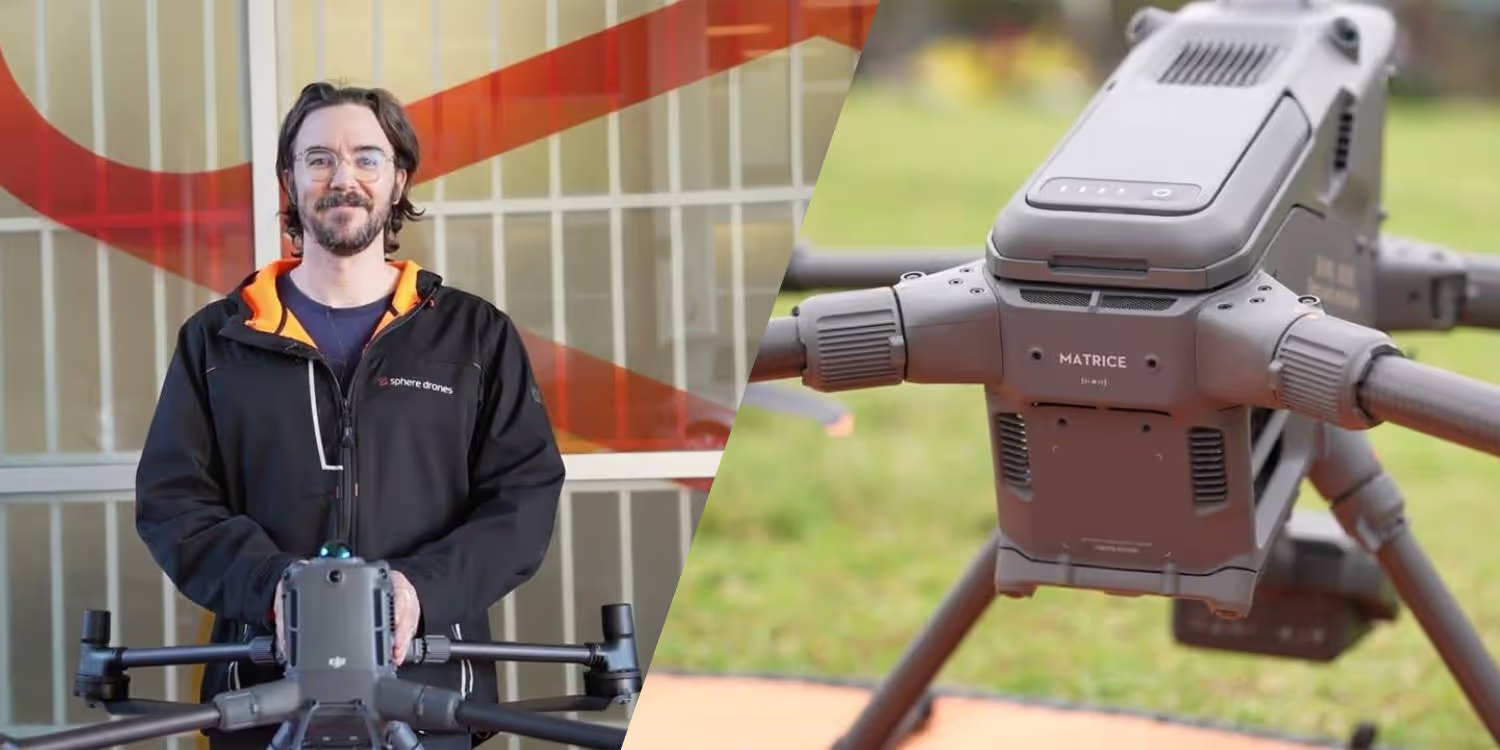
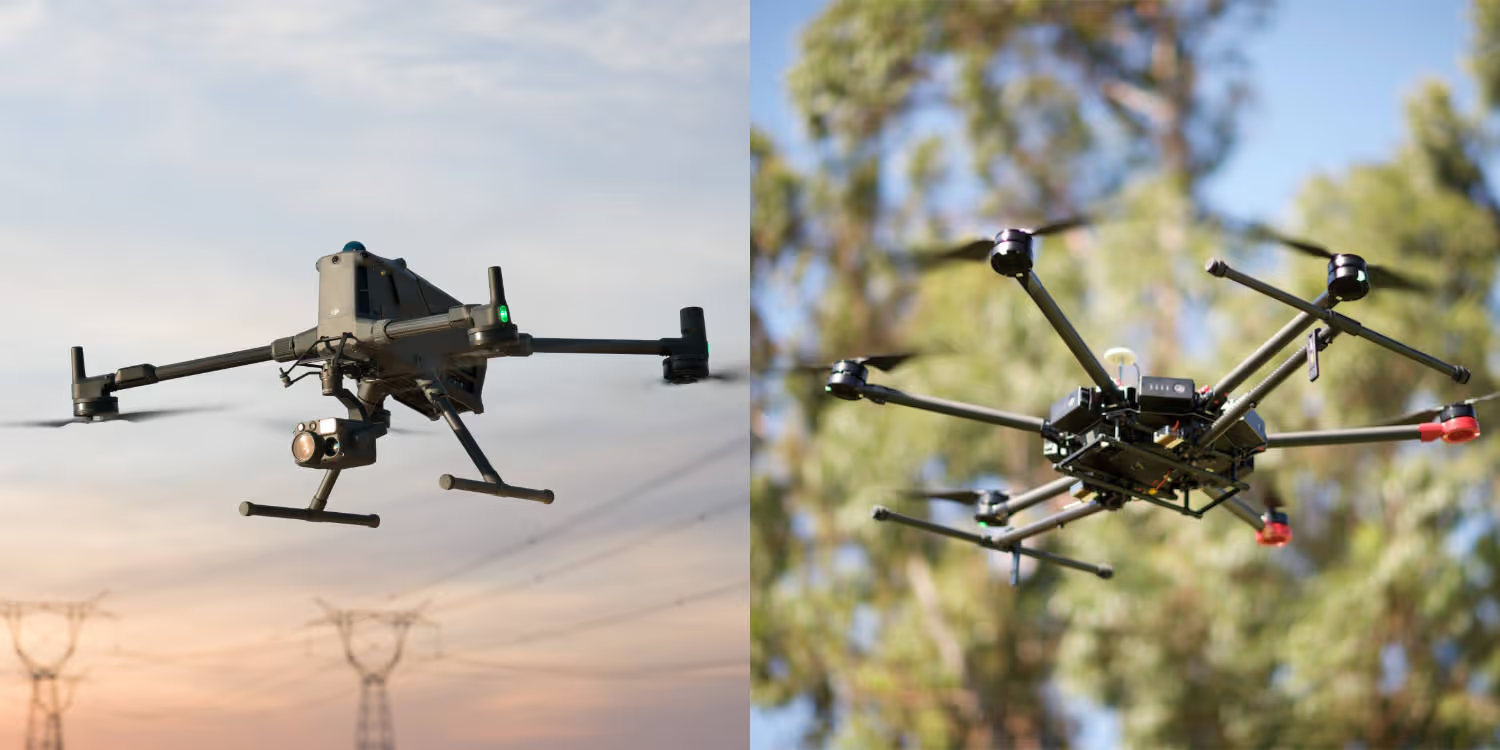
The DJI AP100 mounts on the back of the M400. It weighs about 935 g with the bracket, keeps the aircraft's full 15.8 kg takeoff weight, and costs around six minutes of flight time. It shares the drone's IP55 rating and works from minus 20 to 50 degrees.
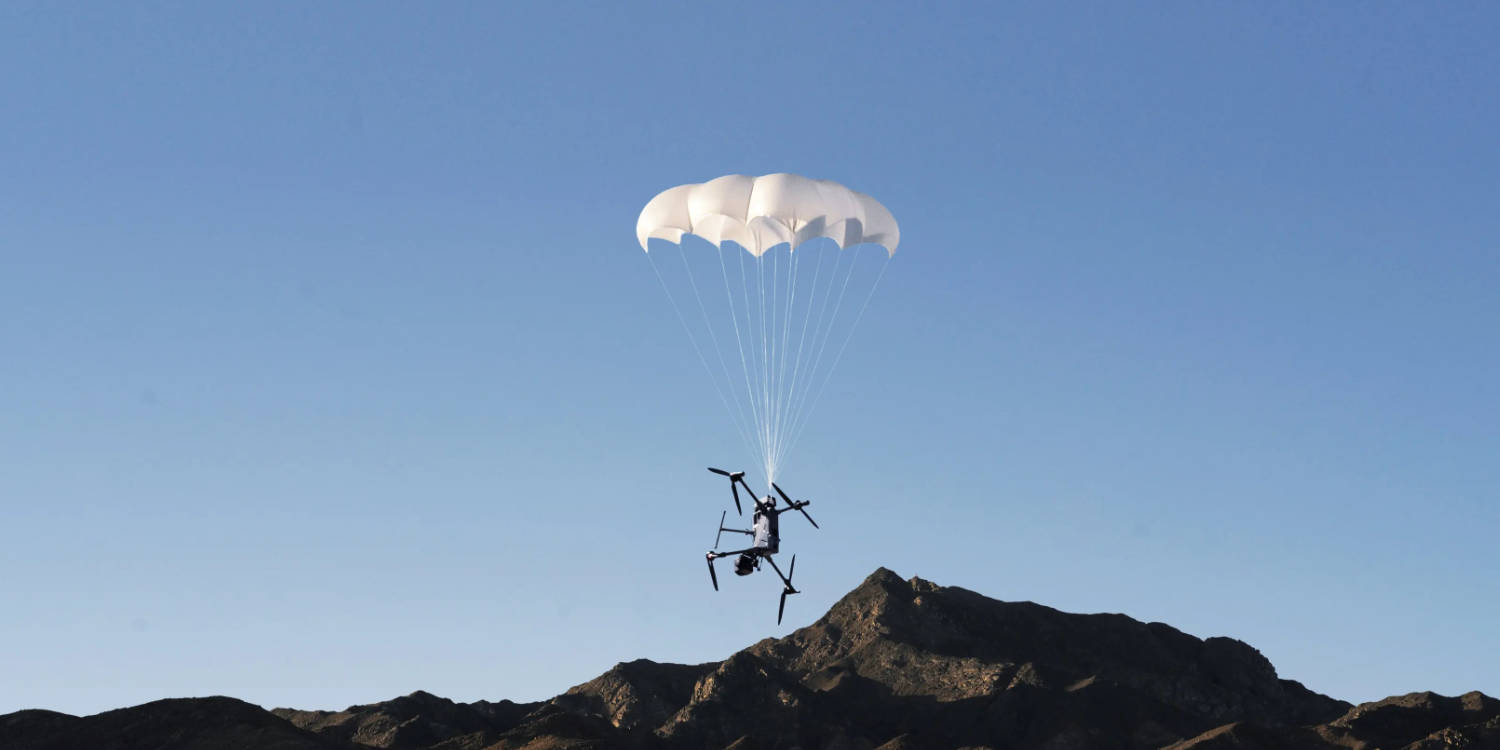
It runs independently. Its own flight controller, sensors and power mean it can still fire after the drone's battery, flight controller or radio links have failed, with about an hour of backup charge in its capacitors.
Start to finish, deployment takes under a second:
It's single use, so you replace the unit after any deployment, and DJI recommends retiring the pod three years after activation. A gimbal safety tether is also required, to stop the payload tearing off when the parachute opens.
Fitting the AP100 switches off the M400's downward and backward mmWave radars, so you lose obstacle sensing below and behind the aircraft. Fine for most inspection and mapping work, but plan for it.
One Australia-specific catch: some triggers only run in supported regions. Geocaging auto-deploy and remote deployment through FlightHub 2 are enabled for the EU, UK and a set list of countries, but not Australia. Anomaly-based auto deployment and manual deployment from DJI Pilot 2 both work here.
The AP100 is certified to European and UK standards, but not yet to CASA's. Because it already meets the underlying international standards, approval in Australia looks likely. It just isn't confirmed at this stage.
A parachute that fires in an emergency lowers the chance of a total loss and reducesthe damage when things go wrong. It adds up most with an expensive payload.
The M400 can carry a payload worth more than the drone itself, and 15.8 kg coming down uncontrolled puts the lot at risk, along with whatever's underneath. A slowed descent can turn a write-off into a repair.
If you run an M400 in mining, utilities, public safety or critical infrastructure and you're moving towards flights over populated areas or BVLOS, the AP100 changes what you can realistically get approved. On an aircraft this size, ground risk has been the main blocker, with no clean way to manage it at the airframe until now.
It opens up the high-value work: corridor and pipeline inspection, patrol and survey near people, and dock-based BVLOS where the flight path can't stay clear of the public.
Register your interest and we'll be in touch once we have firm details on availability and pricing.
Not specifically. CASA hasn't published anything on the AP100. It's certified against EASA and UK CAA standards, and in Australia it works as a ground-risk mitigation you build into an AusSORA safety case, assessed case by case.
Not by itself. It's a strong mitigation towards those operations, but the approval runs through CASA under AusSORA, and a parachute claimed at medium or high robustness has to be validated by CASA's Airworthiness and Engineering Branch.
The Matrice 400 only. It isn't compatible with any other DJI enterprise aircraft.
About six minutes. The pod weighs roughly 935 g and the aircraft keeps its full 15.8 kg takeoff weight.
No. It's single use and has to be replaced after any deployment. DJI also recommends retiring the unit three years after activation.
When it's fitted, the M400 switches off its downward and backward mmWave radars, so obstacle sensing in those directions drops. You also need a gimbal safety tether fitted.