Crop pests cause millions of dollars in damage every season, and the earlier an infestation is found, the cheaper it is to control.
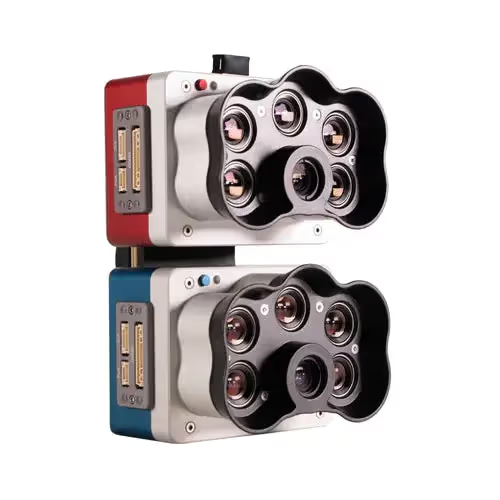
Traditional monitoring means walking the crop looking for nests and damage, or relying on satellite imagery that lacks the detail to catch problems early. Drones sit a step above both, capturing the whole field in detail with multispectral sensors and without the legwork.
How does pest monitoring work?
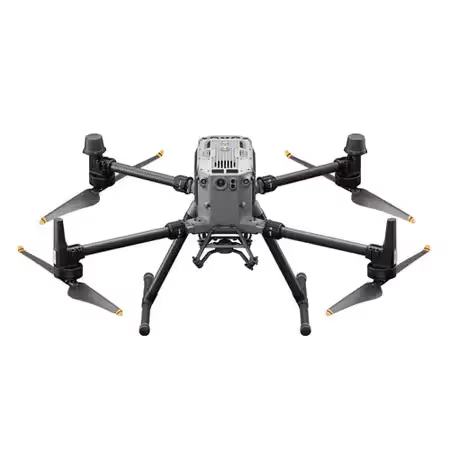
- A drone equipped with a multispectral sensor is up above a field of crops.
- The drone is set on an automated route and takes photos to create a map of the field.
- The drone then lands and the data from the multispectral sensor is then processed and looked at to find out where the pests are, how much damage they are causing.
- From here next steps are decided and if possible, pests are then removed using pesticides sprayed from a drone.
Benefits of using drones
- Data can be captured at a much faster rate with more detail as it can fly much closer to the ground.
- Data can be captured with ease when working in hard-to-reach environments with tough terrain.
- Thanks to the ability to send a drone up more often than a plane, data can be compared for more accurate results and help find issues faster.
Images via MicaSense


.jpeg)