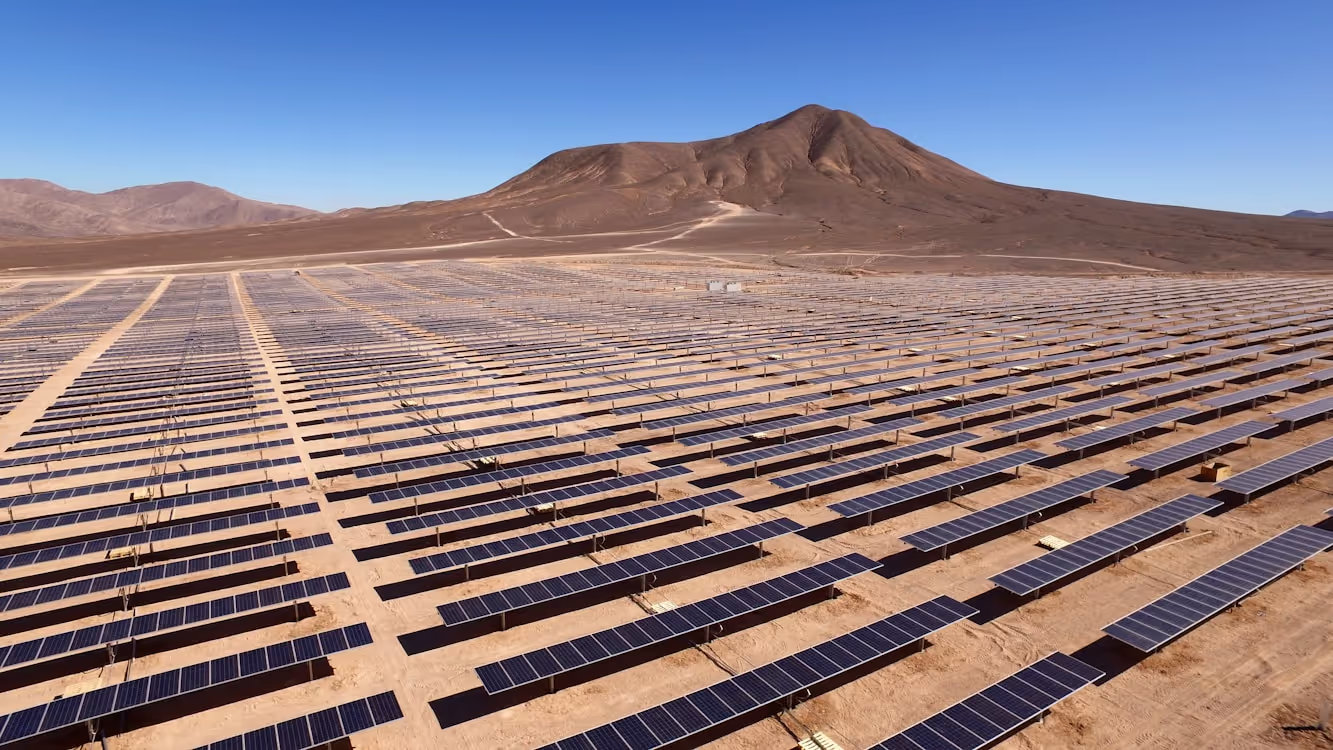
Solar operations run on performance data. Every faulty module, string failure and connector issue quietly erodes output until someone finds it.
Solar inspection with an automated drone lets operators find those faults far more often, without scheduling an inspection contractor for every cycle.
Traditional drone programs struggle to keep pace. Contractor inspections are scheduled, not on-demand, so issues accumulate between visits and a manual thermal sweep can take weeks per cycle.
Solar farm inspection is the use of automated drone systems, remote operations technology and automated data workflows to perform routine thermal and visual inspection across a solar asset.
Rather than operating drones manually, missions are pre-planned and automatically executed according to the inspection schedule.
For example:
Captured data is automatically transferred into the asset-management systems operators already use, turning point-in-time surveys into a continuous record.
Thermal Array Inspection
Automated thermal sweeps detect faulty modules, string failures and hot-spots across the array, often overnight, without an inspection contractor on site.
Visual Condition Inspection
Regular visual capture identifies soiling, vegetation encroachment and physical damage affecting output.
Commissioning and Handover
During construction and commissioning, drones capture defects and verify build quality at EPC handover.
Substation and Inverter Checks
Thermal and visual inspection of substations and inverter stations supports condition monitoring across balance-of-plant.
Defect Classification
Captured data feeds automatic defect classification and work-order generation, closing the loop from detection to repair.
These workflows can be scheduled on a fixed cadence or run on-demand, replacing annual point-in-time surveys with a continuous record.
Utility-scale solar farms cover areas that cannot be efficiently inspected within visual line of sight (VLOS).
Beyond visual line of sight (BVLOS) operations allow drones to inspect an entire site, and campaigns across a portfolio, while maintaining compliance and safety.
BVLOS capability enables:
For asset owners and O&M providers, BVLOS is a key enabler of continuous solar inspection.
Effective solar inspection requires more than a drone. It combines automated flight hardware, remote operations, governance controls and automated data delivery into a repeatable workflow.
At Sphere, solar inspection programs combine:
Together, these technologies help solar operators scale inspection beyond scheduled contractor visits.
Solar operations adopting automated inspection can achieve benefits across performance, cost and accountability.
Every solar asset is different. The right mix of HubT and HubX depends on your site size, your inspection cadence, and how defect data feeds your O&M workflow.
A Sphere team member can assess your operation, identify the workflows worth automating first, and model continuous inspection against your current contractor costs.
Book a solar inspection demo to see how automated inspection fits your operation.



.jpeg)